
Mitigating Reservoir Loss Amidst Growing Drought Conditions
As drought conditions strain water supplies in North Carolina and Virginia, surface evaporation becomes a critical management challenge for reservoirs.
By Editorial Team ·
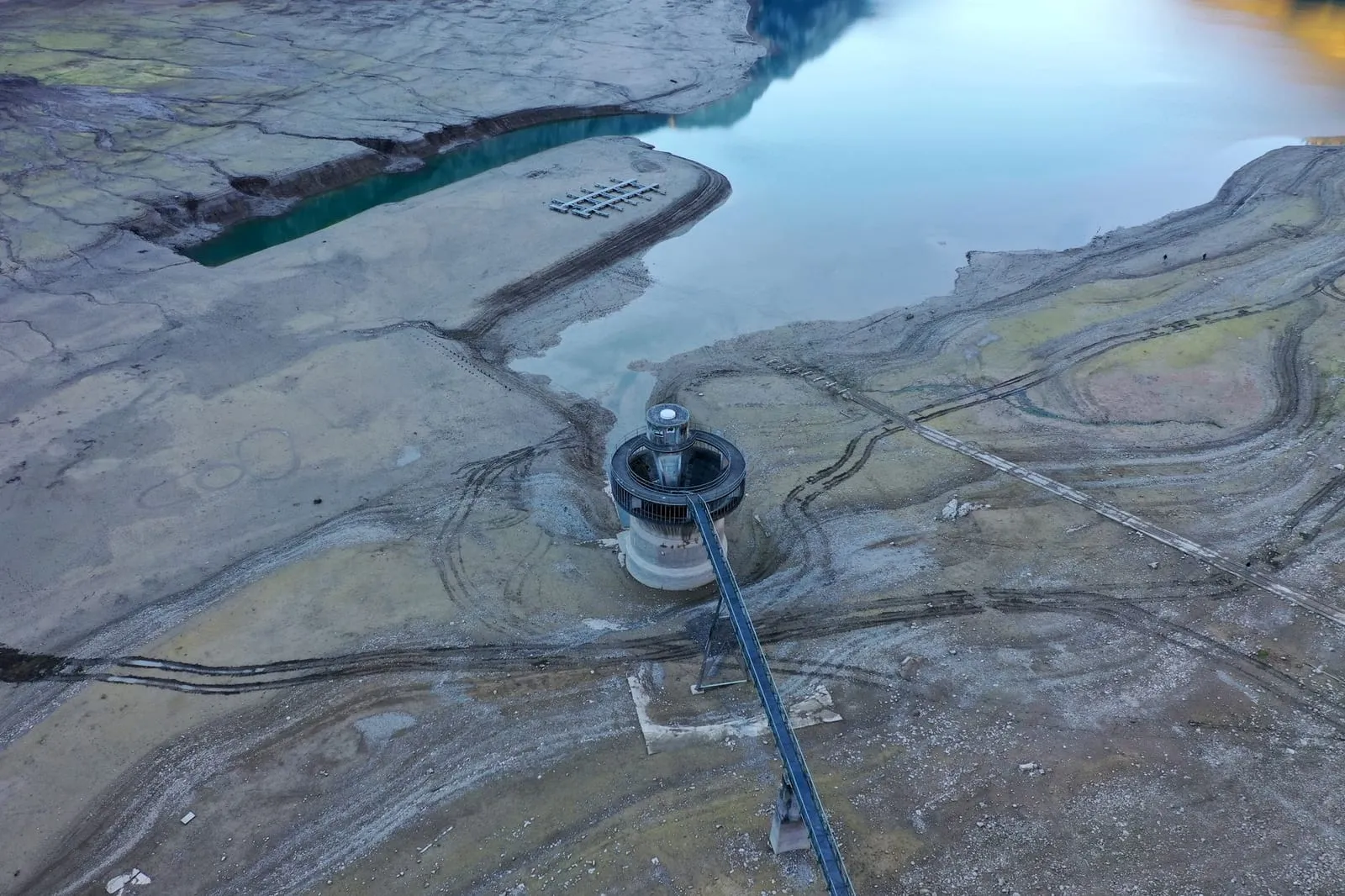
Recent drought conditions in the Mid-Atlantic have placed unprecedented pressure on municipal water supplies, forcing local authorities to implement strict usage restrictions. In North Carolina, declining levels in major sources like Lake Michie threaten both drinking water stability and regional food supplies (ABC11 News). Similarly, in Virginia, the lack of precipitation has forced high-volume users, such as data centers, to face the same water restrictions as residential customers (Virginia Mercury).
As surface reservoirs decline, the rate of evaporation becomes a primary driver of water loss. Managing this loss is no longer just a matter of efficiency; it is a core component of drought resilience.
Diversifying surface management strategies
When water levels drop, operators must choose between various methods to reduce evaporation that balance cost, ease of installation, and conservation goals. Recent infrastructure developments highlight a shift toward multi-purpose technologies. For example, a large-scale floating solar plant recently inaugurated in Australia demonstrates how operators can combat extreme drought by simultaneously generating power and shielding reservoir surfaces (CPG Click Petróleo e Gás).
Floating solar (FPV) systems offer a significant advantage by utilizing the surface area of water bodies that might otherwise be lost to the atmosphere. While these systems involve higher initial capital costs, the dual benefit of renewable energy production and water preservation makes them an increasingly attractive option for large-scale utilities.
Other common approaches include:
- Shade balls: HDPE spheres that can achieve roughly 66–75% reduction in field studies at approximately 91% coverage (field studies).
- Chemical monolayers: These involve applying substances like cetyl or stearyl alcohol to create a barrier, typically reducing evaporation by 20–40% (Craig et al. 2005). However, these are highly sensitive to wind and temperature and require frequent reapplication.
- Natural shading: Using biological covers like duckweed or lilies can provide coverage, but these are often limited by regional scalability and biological constraints.
High-performance modular and continuous covers
For critical infrastructure where water preservation is the priority, high-coverage physical barriers are often employed. These include floating modular covers and continuous geomembranes.
Modular systems consist of interlocking tiles or balls. While field studies often report evaporation reductions in the 65–80% range (Mady et al. 2021; Lehmann et al. 2019), near-full continuous coverage can achieve much higher results. For instance, manufacturer data indicates that Hexprotect® AQUA tiles can provide up to 95% evaporation reduction (AWTT). For even more intensive requirements, the Rhombo Hexoshield® system is designed to reduce evaporation by up to 98% (AWTT).
However, operators must consider the physical stability of these systems. Lightweight modular tiles can be prone to “piling up” or being displaced by heavy wind (Lehmann et al. 2019; Mady et al. 2021). To mitigate this, some high-performance options utilize water-ballasted designs or specific interlocking geometries to ensure the cover remains seated during high-wind events (AWTT).
Continuous geomembrane covers are another option, capable of providing a 95%+ seal (Yao et al. 2021). While highly effective, they present unique engineering challenges, including the need for complex anchoring, buoyancy management, and systems to pump out rainwater that accumulates on top of the membrane.
The impact of wind and surface area
The effectiveness of any evaporation control method is heavily influenced by the local environment, specifically wind speeds and the “fetch” of the water body. Wind facilitates the removal of the saturated air layer sitting just above the water surface, which accelerates the rate of mass transfer (Harbeck 1962).
Because wind can physically strip away lightweight covers or disrupt chemical monolayers, many engineers prioritize “ballasted” or “pre-loaded” systems for open reservoirs. Reducing the exposed surface area through physical barriers is the most direct way to counteract the energy budget of the reservoir, as it limits the amount of energy available for the latent heat of vaporization (Allen et al. 1998). As drought conditions become more frequent, the transition from passive water storage to actively managed, covered systems will likely become a standard requirement for municipal and industrial water security.
Frequently asked questions
- How much evaporation can floating solar panels reduce?
- Floating solar installations provide a dual benefit by reducing evaporation while generating electricity (CPG Click Petróleo e Gás).
- What are the effectiveness ranges for modular floating covers?
- Modular covers typically achieve 65–80% reduction in field studies (Mady et al. 2021), though near-full coverage can reach up to 95–98% (AWTT).