
Modular Floating Covers (Tiles & Hybrid Panels)
Interlocking tiles, hybrid panels and floating modules cut evaporation 65–80% in the field and up to 95–98% at near-full coverage — compared fairly.
What it is
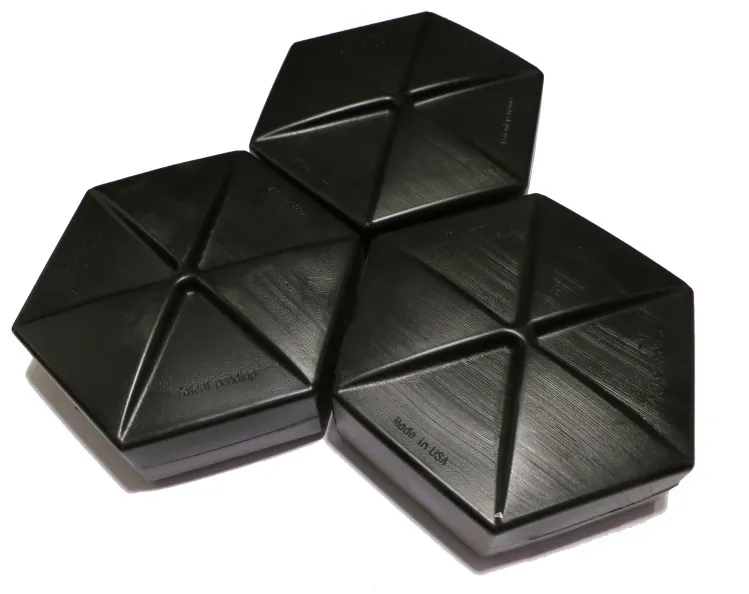
Modular floating covers are interlocking units — flat hexagonal tiles, spheres, or hybrid rhombus-hexagonal panels — that float in a self-arranging layer across a water surface. Unlike a single continuous sheet, the cover is made of many discrete modules, so it conforms to any shape, follows changing water levels, and can part around fixed equipment. This category sits between loose shade balls and the single-sheet geomembrane covers.
How it works
A floating module layer caps the surface and blocks most incoming sunlight, attacking the radiation, surface-exposure and (for ballasted designs) wind terms of the evaporation balance — see what is evaporation. Flat, gap-free shapes seal the surface more completely than round balls, which is why tiles and hybrid panels reach higher coverage than the ~91% geometric ceiling of spheres.
How well it works
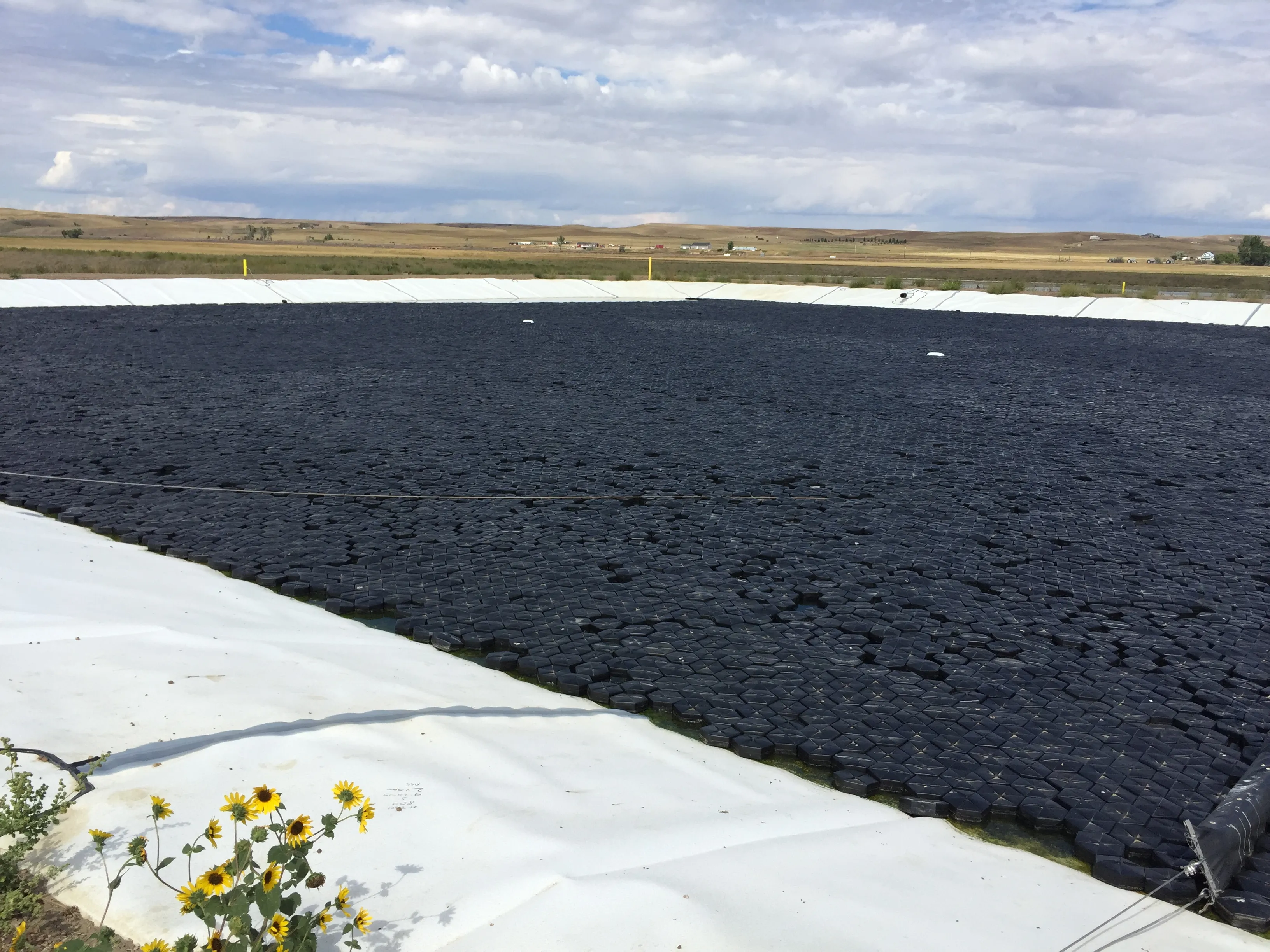
Independent field studies report 65–80% reduction (Mady et al. 2021; Lehmann et al. 2019) for floating modular covers in real conditions, rising toward 95–98% at near-full, continuous coverage. It is worth keeping the distinction clear: field averages reflect partial coverage and real wind, while the upper figures assume a dense, near-complete cover.
Shape and ballast matter
- Spheres self-distribute well but leave gaps (covered in shade balls).
- Flat tiles seal the surface better but, if thin and unballasted, can pile up or blow away in high wind (Lehmann et al. 2019; Mady et al. 2021). Adding mass — water ballast or pre-loading — is the standard fix and largely addresses the displacement problem.
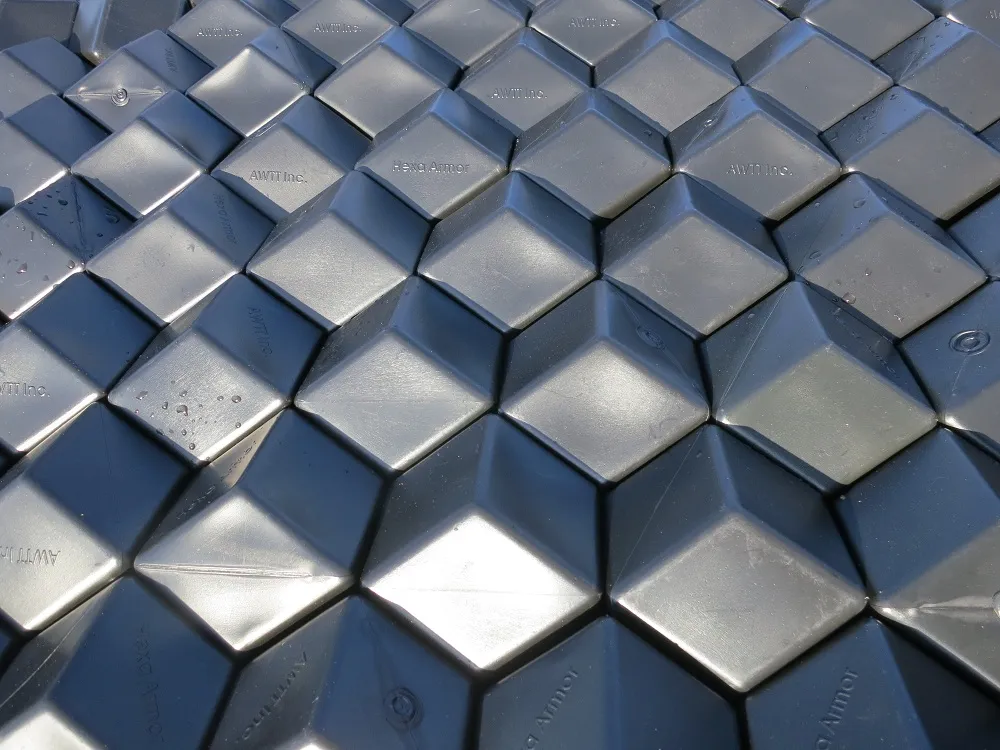
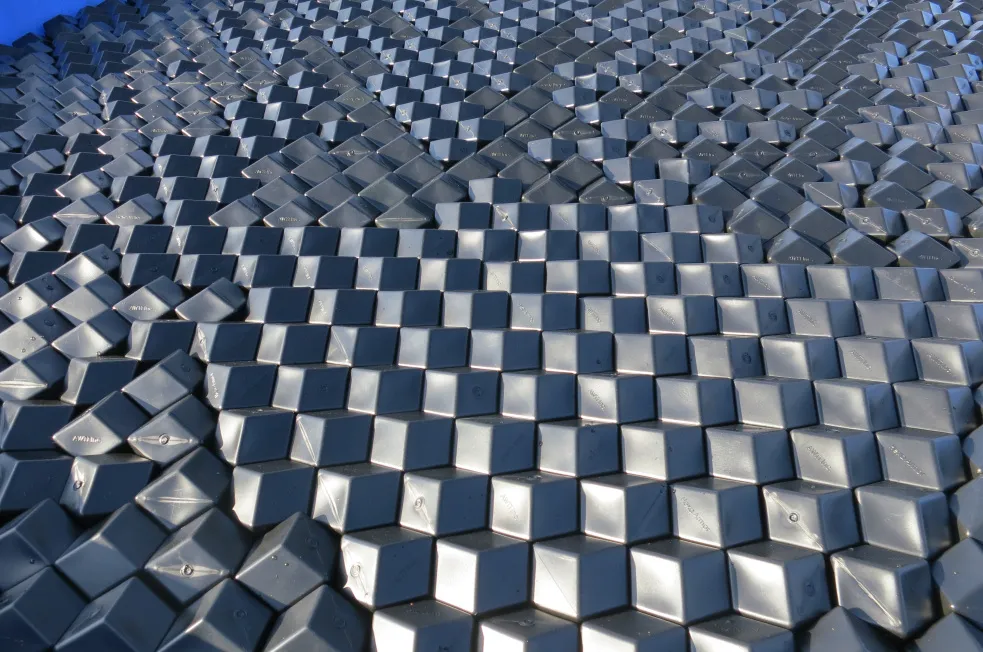
- Hybrid rhombus-hexagonal panels aim to combine gap-free coverage with wind stability and load-bearing rigidity.
Manufacturer examples
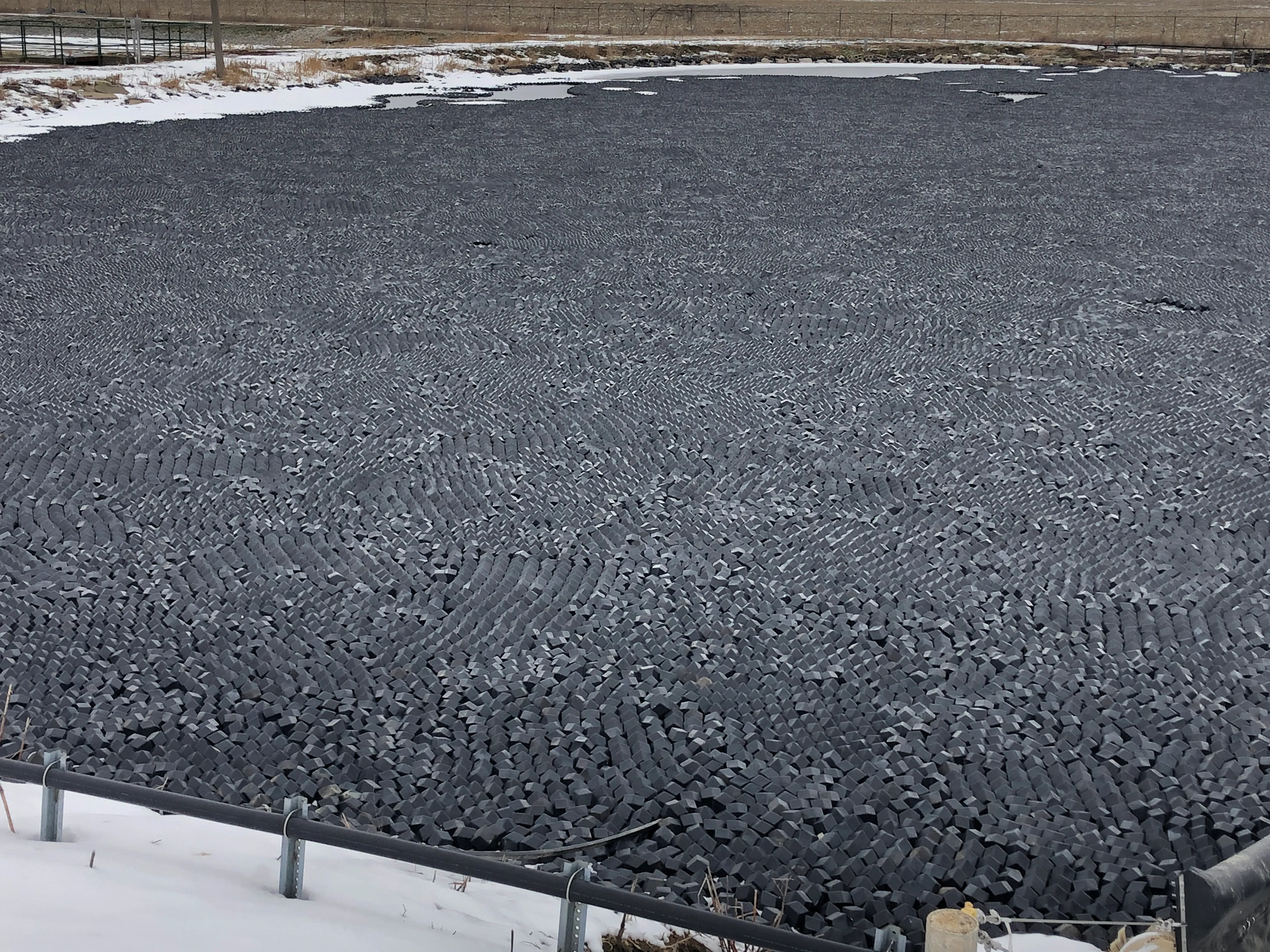
Among commercial products in this class, AWTT’s Hexprotect® AQUA — pre-loaded interlocking hexagonal HDPE tiles — is rated for 99% surface coverage and up to 95% evaporation reduction (AWTT), with 130 MPH certified wind resistance (AWTT) from its built-in water ballast. The higher-load Rhombo Hexoshield® hybrid panel is rated for 99% coverage and up to 98% evaporation reduction (AWTT) — the highest in AWTT’s range — and is load-bearing for personnel and on-cover equipment. These are presented as examples alongside shade balls and other tile systems; the percentages are AWTT’s own manufacturer figures, and neither should be read as an unqualified “best.”
Documented outcomes
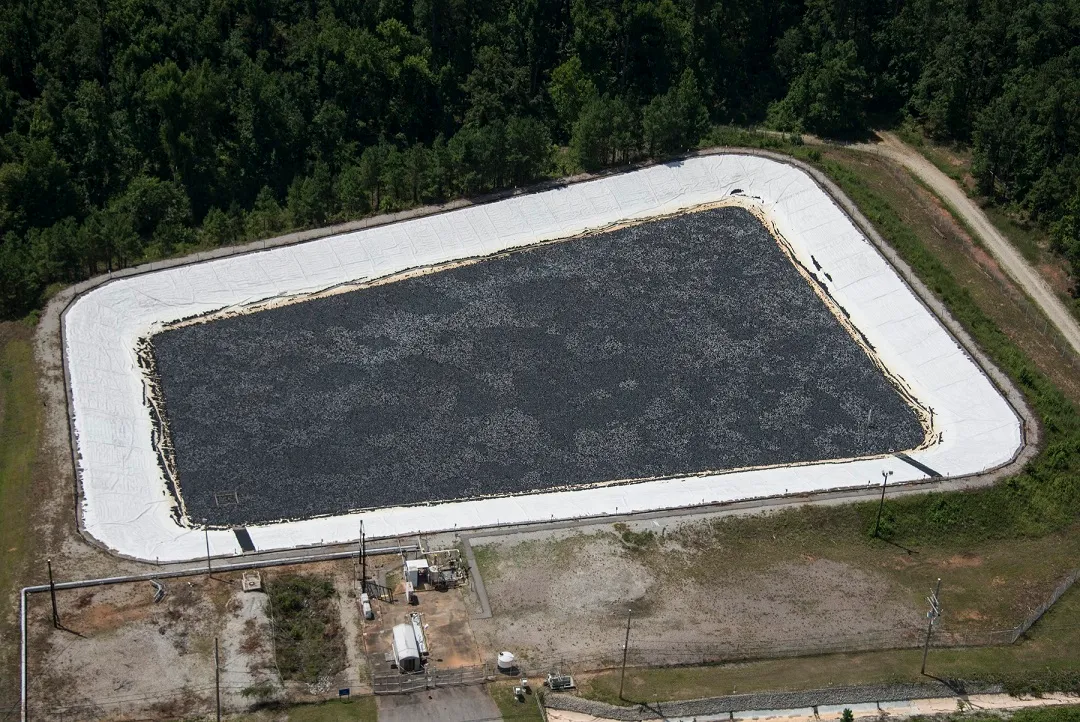
A Rhombo-type cover at the Savannah River Site (281-8H retention basin) earned a 2017 U.S. Department of Energy Sustainability Award, with the public record citing roughly 55 million gallons of water saved per year (U.S. DOE). AWTT also reports its modular covers came through four named hurricanes — including Helene (2024, Cat 4) — with zero repairs (AWTT). More detail and sourcing is on the evidence page.
Where it fits
Modular covers suit municipal drinking-water reservoirs and industrial, wastewater and mine-water ponds that need a high, durable reduction plus equipment access. They cost more upfront than chemical monolayers or natural methods but scale well and need little maintenance. See the full methods comparison for the side-by-side view.