
Continuous Geomembrane Floating Covers
Single-sheet floating geomembranes give the highest evaporation seal — ~95%+ — but trade off access, gas venting and rainwater management.
What it is
A geomembrane floating cover is a single continuous sheet — typically reinforced HDPE, RPE or similar — that floats directly on the water and seals the surface almost completely. Where modular systems are made of many separate units, a geomembrane is one large, flexible barrier, often fabricated to fit a specific basin and held in place with floats, ballast tubes and perimeter anchoring.
How it works
By laying an unbroken sheet over the water, a geomembrane removes nearly all direct contact between the surface and the air, eliminating the vapour-pressure deficit across the covered area (see what is evaporation). It also blocks all sunlight, so the water stays cool and dark.
How well it works
Geomembranes deliver the highest seal of any cover — ~95%+ (Yao et al. 2021; Craig et al. 2005) — because, unlike spheres or tiles, a single sheet leaves no inter-unit gaps. This makes them the upper benchmark for evaporation suppression, and also for algae and odour control, since the water below receives essentially no light.
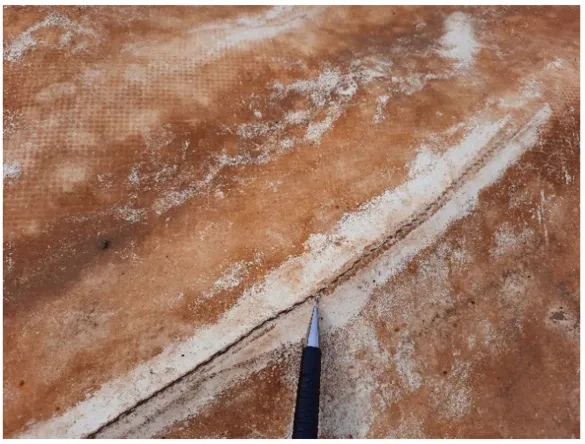
Trade-offs
The near-total seal comes with the most demanding operational profile of any method here:
- Access. Because it is one continuous sheet, the cover must be physically moved or rolled back to reach the water — far harder than parting a modular layer around equipment.
- Rainwater. Rain pools on top and must be pumped off to prevent the cover from being weighed down or submerged.
- Trapped gas. Biological or process gases can collect underneath and must be vented so the cover does not balloon.
- Ballast and anchoring. Floats, ballast tubes and perimeter anchoring are needed to keep the sheet flat and secure against wind.
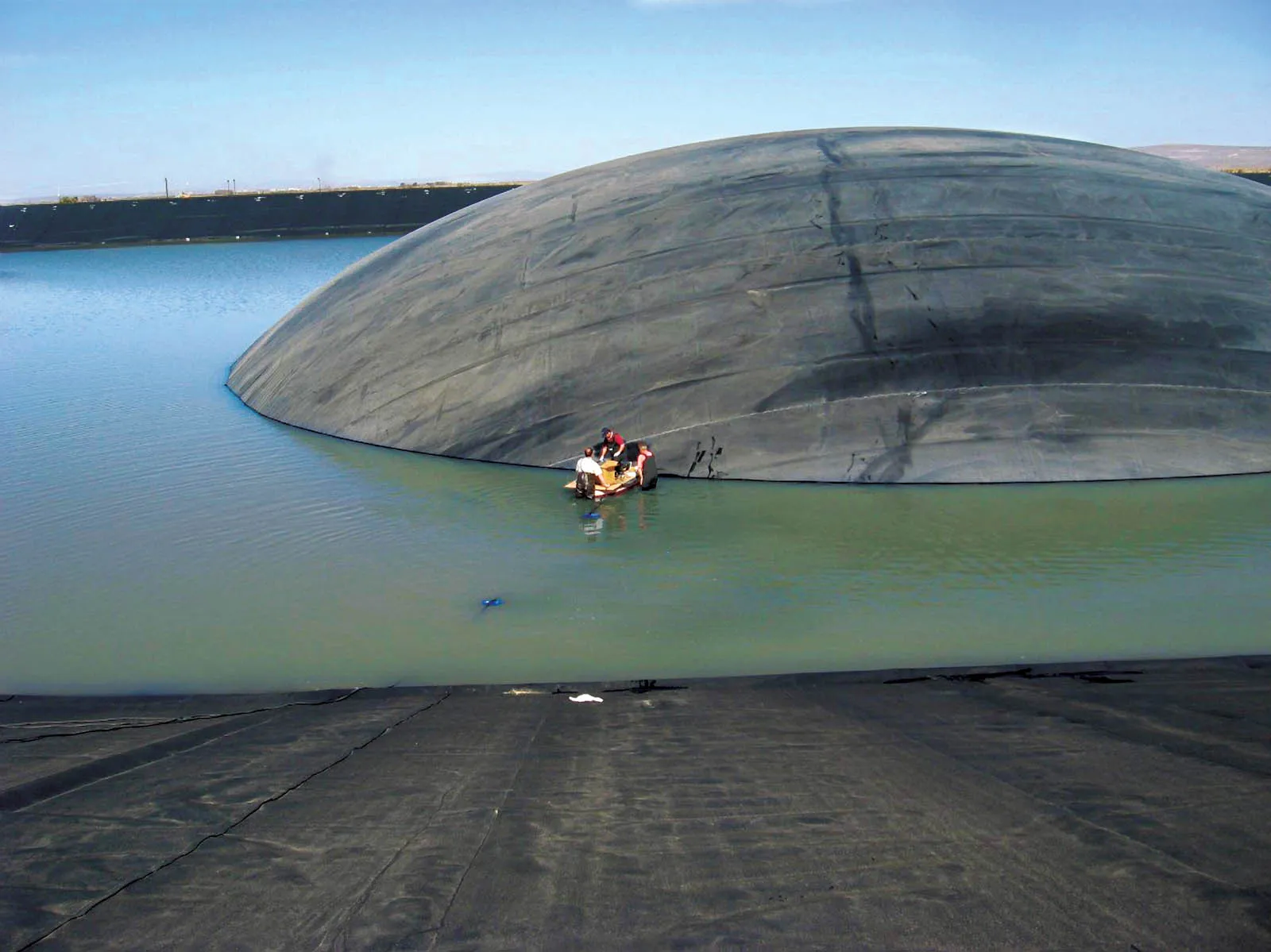
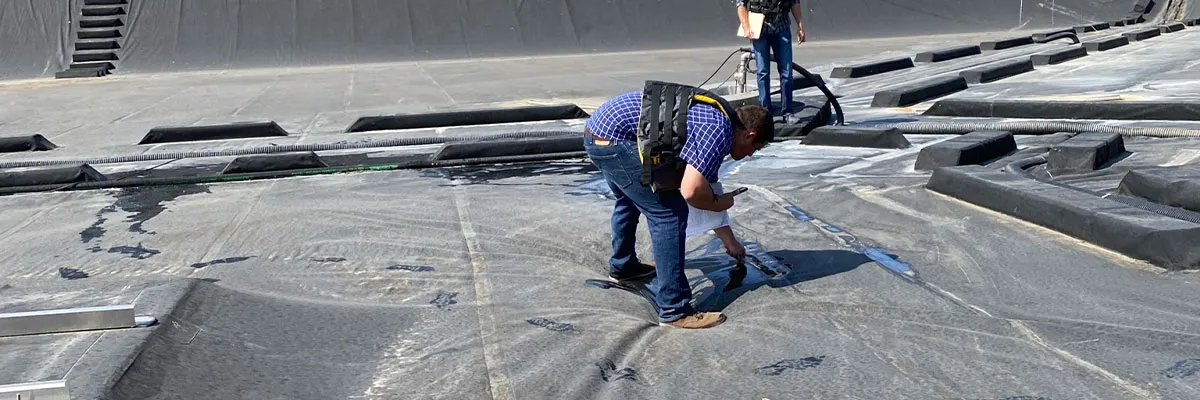
These requirements make geomembranes most practical on defined, regular basins and add to both installed cost and ongoing maintenance. Service life is long — roughly 20–40 years — which helps offset the capital outlay.
Where it fits
Geomembrane covers suit regular, defined basins and tanks — especially potable or process water — where maximum reduction and full light blockage matter more than easy surface access. Where access, repositioning around equipment, or following changing water levels is important, the modular approach is more flexible; compare modular floating covers. For high reduction while keeping the surface clear, see suspended covers. The full methods comparison sets these trade-offs side by side.