
Global Drought Trends and the Critical Role of Reservoir Management
Recent reports of plummeting reservoir levels and severe droughts highlight the urgent need for effective evaporation reduction strategies.
By Editorial Team ·
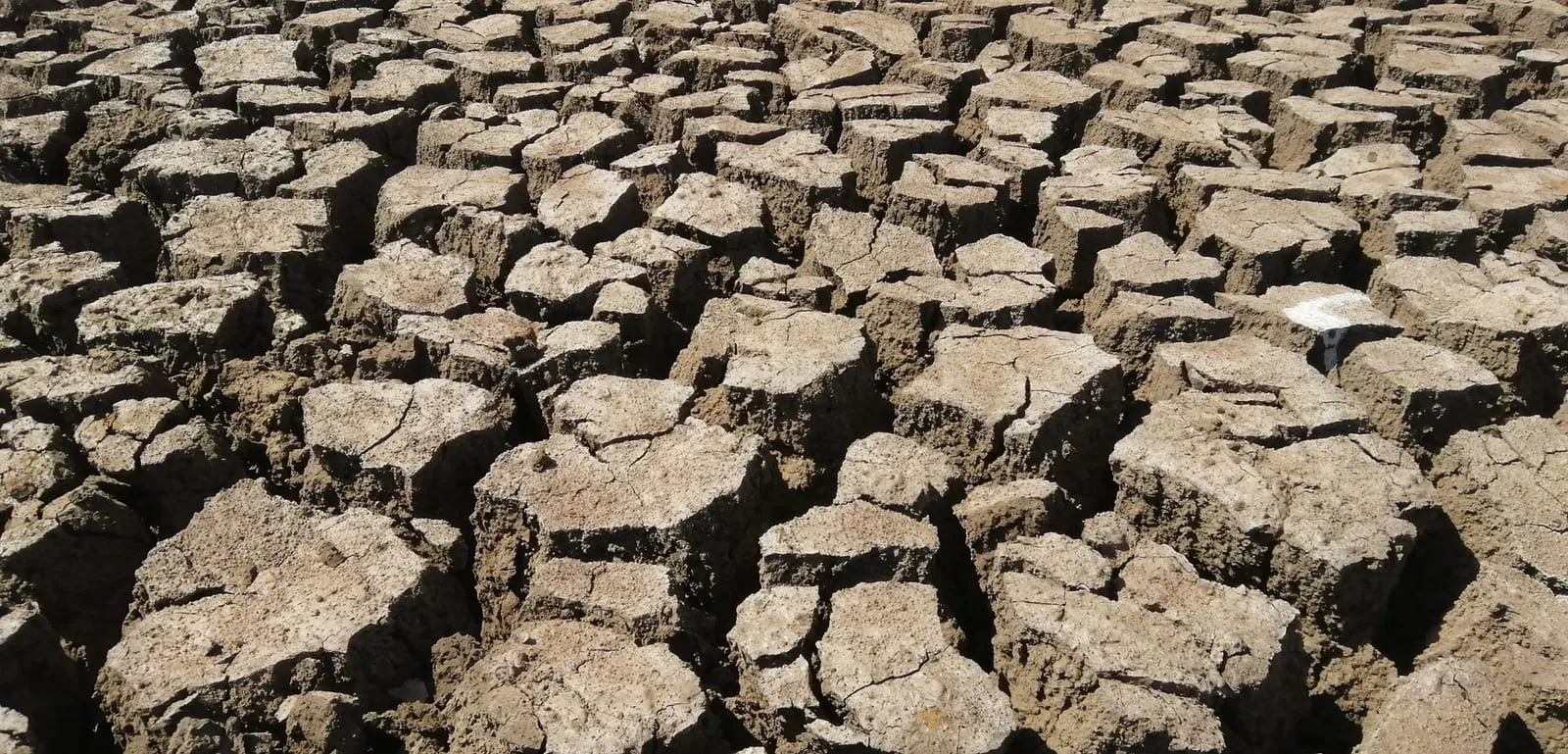
The increasing frequency of extreme drought events and the rapid depletion of critical water reservoirs are forcing municipalities and agricultural sectors to rethink how they secure and preserve existing water supplies.
This week in water
- A former negotiator warned that mismanagement and significant evaporation losses are threatening Egypt’s water security and reservoirs (ENA English).
- Severe drought conditions in Maine’s Midcoast region have led to dry wells and urgent calls for water conservation (PenBay Pilot).
- Agricultural producers in Washington are struggling to navigate the practical and economic realities of an unprecedented drought (seattletimes.com).
- Due to drought-induced shortages, the town of Amherst has had to pivot to a county water supply (WSLS).
- Investigations revealed that companies in drought-stricken England are using billions of liters of public water (The Guardian).
- A local Maine orchard has managed to remain resilient against drought by utilizing its extensive water supply (foxbangor.com).
- Drought conditions have forced Amherst to begin withdrawing water from a county-owned lake (Lynchburg News and Advance).
- New Mexico’s largest reservoir has reached a critical low, dropping to only 1.4% of its capacity (Science Daily).
The scale of the reservoir crisis
The recent reports of New Mexico’s largest reservoir dropping to 1.4% capacity (Science Daily) and the warnings regarding Egypt’s reservoir losses (ENA English) illustrate a fundamental challenge in storage management. When reservoir levels drop to extreme lows, the remaining water is often more susceptible to temperature fluctuations and environmental stressors.
As surface areas change, the drivers of evaporation undergo significant shifts. The physics of how water leaves an open body depends heavily on the energy balance at the surface. When a reservoir is full, the sheer volume of water provides thermal inertia, which can slow temperature-driven evaporation. However, as volume decreases, the water body can heat up more rapidly, potentially accelerating loss rates during peak solar radiation.
The crisis in Maine, where residents are facing dry wells (PenBay Pilot), highlights that drought is not just a large-scale infrastructural issue but a local survival issue. Whether it is a massive reservoir in the American Southwest or a local well in the Midcoast, the underlying problem remains the same: the loss of liquid water to the atmosphere through phase change. Understanding what is evaporation is the first step in moving from reactive crisis management to proactive conservation.
Identifying the drivers of loss
To mitigate these losses, managers must understand the variables that dictate the rate of water loss. The Penman-Monteith equation (Allen et al. 1998) remains the gold standard for calculating these rates, as it incorporates energy availability, wind speed, humidity, and vapor pressure deficits.
In the drought-stricken regions of Washington and England (seattletimes.com; The Guardian), the combination of high temperatures and low relative humidity creates a high vapor pressure deficit, which pulls moisture more aggressively from open surfaces. Furthermore, wind plays a critical role. Aerodynamic mass-transfer, often described via the Lake Hefner model (Harbeck 1962), explains how wind removes the saturated boundary layer of air sitting just above the water surface, replacing it with drier air and maintaining a high evaporation gradient.
When reservoirs reach the critical levels seen in New Mexico (Science Daily), the surface-area-to-volume ratio becomes a vital metric. While a shrinking reservoir might have a smaller surface area in absolute terms, the percentage of the total volume lost to evaporation can become disproportionately high if the remaining water is shallow and easily heated by solar radiation.
Evaluating technical interventions
As drought conditions become “unprecedented” (seattletimes.com), the industry is moving toward more aggressive methods to reduce evaporation. Relying on conservation alone is often insufficient for large-scale municipal or agricultural needs; instead, physical barriers are required to disrupt the energy and mass transfer processes.
Various technologies exist to intercept the energy and moisture exchange, each with different trade-offs:
- Modular Floating Covers: These systems, such as interlocking HDPE tiles, can provide significant protection. While modular covers generally show 65–80% reduction in field studies (Mady et al. 2021), high-performance options like the Rhombo Hexoshield® can achieve up to 98% reduction (AWTT). A known challenge with lightweight tiles is their tendency to displace or pile up during high winds (Lehmann et al. 2019; Mady et al. 2021), which is why ballasted or interlocking designs are often preferred for stability.
- Shade Balls: Often used in large-scale applications, these HDPE spheres can cover roughly 91% of a surface to provide a 66–75% reduction in evaporation (field studies). However, operators must consider how they impact water chemistry and the local ecosystem.
- Continuous Membranes: Large geomembrane covers can provide a near-total seal (up to 95%+ according to Yao et al. 2021), but they require complex anchoring and maintenance systems to handle buoyancy changes caused by rain or varying water levels.
- Biological and Natural Methods: Using organisms like duckweed or azolla can provide coverage, but these are often limited by regional climate and scalability.
- Floating Solar (FPV): This represents a dual-purpose approach, where floating solar arrays reduce evaporation by shading the water while simultaneously generating renewable energy, though this requires higher initial capital investment.
Transitioning from reactive to proactive management
The distinction between the resilient orchard in Maine (foxbangor.com) and the towns in Amherst forced to find alternative water sources (WSLS; Lynchburg News and Advance) likely comes down to the quality and security of their storage. Proactive management involves not just “using less,” but actively protecting the water that has already been captured.
For many municipalities, the choice of an evaporation mitigation strategy must be balanced against the specific conditions of their reservoirs. For example, in high-wind environments, thin-surface covers may fail (Lehmann et al. 2019), making wind-resistant, interlocking modular covers or heavy-duty geomembranes more appropriate. In regions where sunlight is the primary driver of loss, high-albedo or high-coverage shading solutions may be more effective.
Ultimately, as global water security becomes increasingly precarious, the integration of evaporation control into standard reservoir operations is no longer optional. Moving from the reactive “emergency withdrawal” phase seen this week to a sustained, science-based mitigation strategy is essential for long-term water resilience.
Frequently asked questions
- How much evaporation can modular floating covers reduce?
- Modular covers typically achieve 65–80% reduction in field studies (Mady et al. 2021), though manufacturer data for specific products like Rhombo Hexoshield can reach up to 98% (AWTT).
- Can shade balls stop all water evaporation?
- Shade balls provide approximately 66–75% reduction at roughly 91% coverage according to field studies (field studies).