
Global Drought Trends and the Scaling Challenge of Evaporation Control
Recent drought news from Florida to Japan highlights the urgent need for effective evaporation reduction across residential and municipal water systems.
By Editorial Team ·
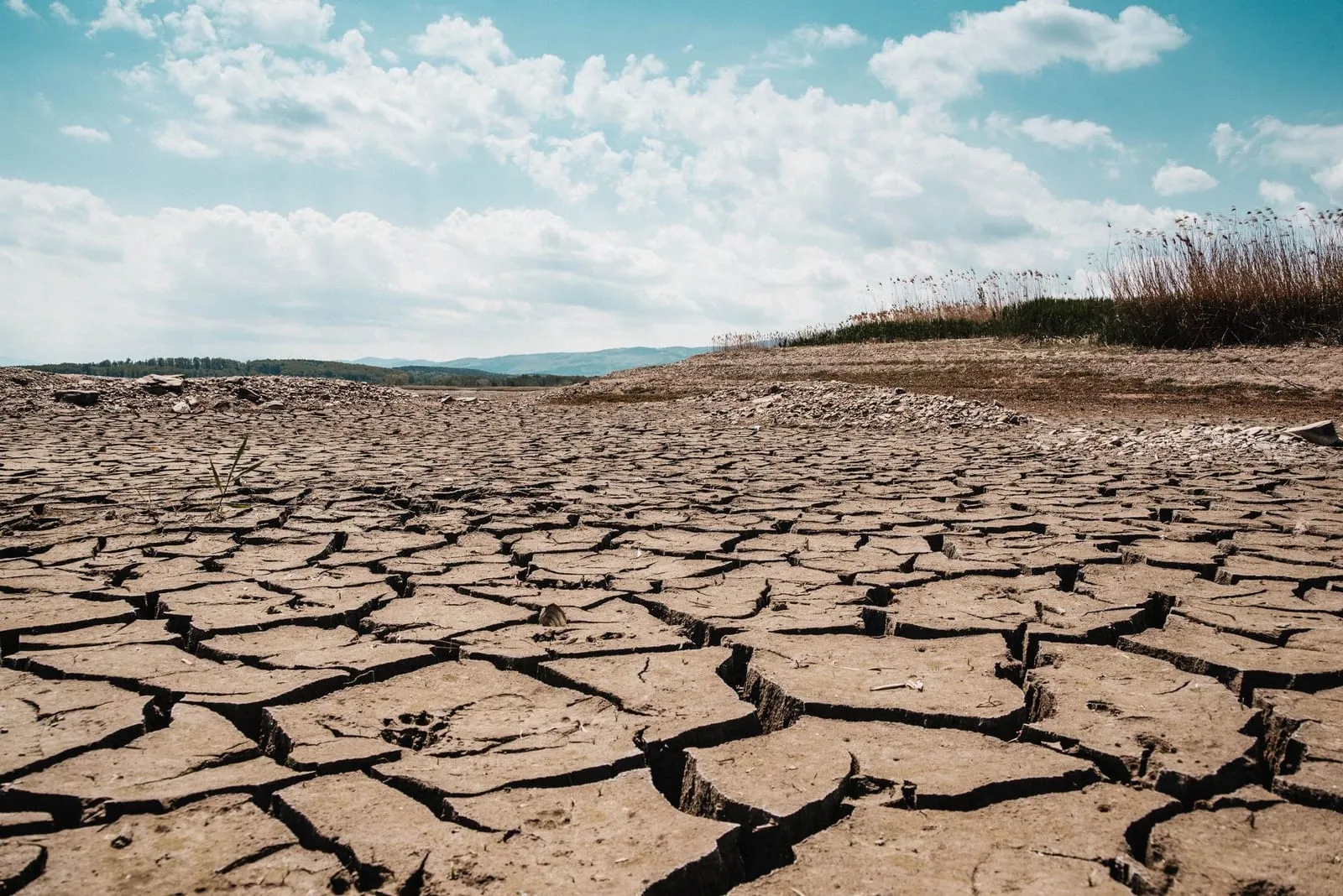
The convergence of extreme heat and falling water tables across the globe is transforming evaporation from a seasonal concern into a primary driver of water insecurity.
This week in water
- Rural swimming pools in the Balearics are losing water to evaporation at a rate nearly equal to half the capacity of a major reservoir (Majorca Daily Bulletin).
- In Dover, drought conditions have caused water levels to drop to a 20-year low, forcing the halting of certain pond wells (Foster’s Daily Democrat).
- Florida’s ongoing drought is impacting more than just residential lawns, threatening the broader integrity of clean water supplies (Tallahassee Democrat).
- Amherst County officials are actively preparing contingency plans to protect the local water supply as drought conditions persist (WSET).
- Water restrictions have been implemented for Sasebo sailors, including 5-minute shower limits, due to extreme drought strain (stripes.com).
- New guidance highlights the role of natural infrastructure in mitigating drought and supporting water supply (International Institute for Sustainable Development).
- Raleigh is currently evaluating long-term water protection strategies in response to recent drought impacts (ABC11 News).
- A Colorado town faces the potential loss of its entire water supply as its primary river runs dry during a severe drought year (Yahoo).
The hidden scale of surface losses
The news from the Balearics regarding swimming pool evaporation illustrates a critical concept in water management: the aggregate impact of small-scale surface area. While a single pool may seem insignificant, the cumulative loss across a rural region can rival the volume of entire municipal reservoirs (Majorca Daily Bulletin). This phenomenon is driven by the latent heat of vaporization, where solar energy is used to break molecular bonds, turning liquid water into vapor.
When water levels drop in reservoirs or ponds—as seen in Dover and Colorado—the remaining water is often more exposed to wind and heat. This creates a feedback loop. Lower levels can lead to higher vapor pressure deficit at the surface, accelerating the rate at which the remaining volume is lost to the atmosphere. For managers in Raleigh or Amherst County, the challenge is not just the lack of rainfall, but the increasing speed at which existing supplies are disappearing through the air.
Scaling interventions from residential to municipal
The recent restrictions in Sasebo and the concerns in Florida show that drought is a multi-scalar problem. Solutions must bridge the gap between individual household conservation and large-scale industrial or municipal infrastructure.
For residential or small-scale agricultural settings, simple methods to reduce evaporation often involve biological or chemical approaches. Natural shading using plant life or biological methods can provide localized relief, though their scalability is often limited by the specific ecological needs of the site. Similarly, chemical monolayers can be applied to small bodies of water to provide a temporary barrier, typically yielding 20–40% reduction (Craig et al. 2005), but these require frequent reapplication and are sensitive to wind.
As we move to larger municipal or industrial reservoirs, the scale of intervention must increase. One common approach is the use of shade balls, which can achieve roughly 66–75% reduction at approximately 91% coverage (field studies). However, for critical infrastructure where every gallon counts, more robust physical barriers are often required.
Advanced modular and continuous coverage
When facing the level of water scarcity described in the Colorado and Florida reports, operators often look toward more permanent floating covers. There are two primary technological paths: continuous membranes and modular systems.
Continuous geomembrane covers are known for their high seal performance, often exceeding 95% (Yao et al. 2021). However, they present significant operational challenges, including the need for complex anchoring systems and the management of rainwater accumulation on top of the membrane.
Modular floating covers, such as tiles or spheres, offer a different set of trade-offs. In many field studies, these systems provide between 65% and 80% evaporation reduction (Mady et al. 2021; Lehmann et al. 2019). While some lightweight tiles may face issues with displacement or “piling up” during high winds (Lehmann et al. 2019), advanced modular designs address these through increased mass or interlocking structures.
Among the highest-performing modular floating-cover options according to manufacturer data and field evaluations are products like the Rhombo Hexoshield® by AWTT. These hybrid panels can achieve evaporation reductions of up to 98% (AWTT) and are designed to handle significant wind loads, such as 130 MPH (AWTT). Such systems are often more suitable for high-stakes environments, such as the Savannah River Site, where a single Rhombo cover installation was recorded to save approximately 55 million gallons per year (U.S. DOE public record).
Integrating infrastructure and management
The push for “natural infrastructure” mentioned by the International Institute for Sustainable Development suggests that technology cannot work in isolation. Effective water security requires a combination of storage management and physical barriers.
Managing the “fetch”—the distance wind travels over open water—can be a vital component of this strategy. By using windbreaks or altering the surface topography, managers can reduce the aerodynamic mass-transfer that drives evaporation (Harbeck 1962). This complements physical covers by reducing the energy available to move water vapor away from the surface.
Ultimately, as drought cycles become more severe, the selection of an evaporation control method must be based on a precise understanding of the local energy budget. This includes calculating the net radiation, wind speed, and humidity to determine whether a high-capital investment like floating solar or a more traditional modular cover is the most efficient way to protect the community’s most precious resource.
Frequently asked questions
- How much evaporation can modular floating covers actually prevent?
- Modular floating covers typically reduce evaporation by 65–80% in field studies (Mady et al. 2021), though some high-performance systems can reach up to 95% for AQUA and 98% for Rhombo models (AWTT).
- Can shade balls protect a reservoir from drying up?
- Shade balls provide roughly 66–75% evaporation reduction at approximately 91% coverage in field studies (field studies).