
Global Water Scarcity and the Growing Pressure on Reservoir Management
Recent droughts in the US, Europe, and Asia highlight the critical need for effective evaporation reduction to protect shrinking water supplies.
By Editorial Team ·
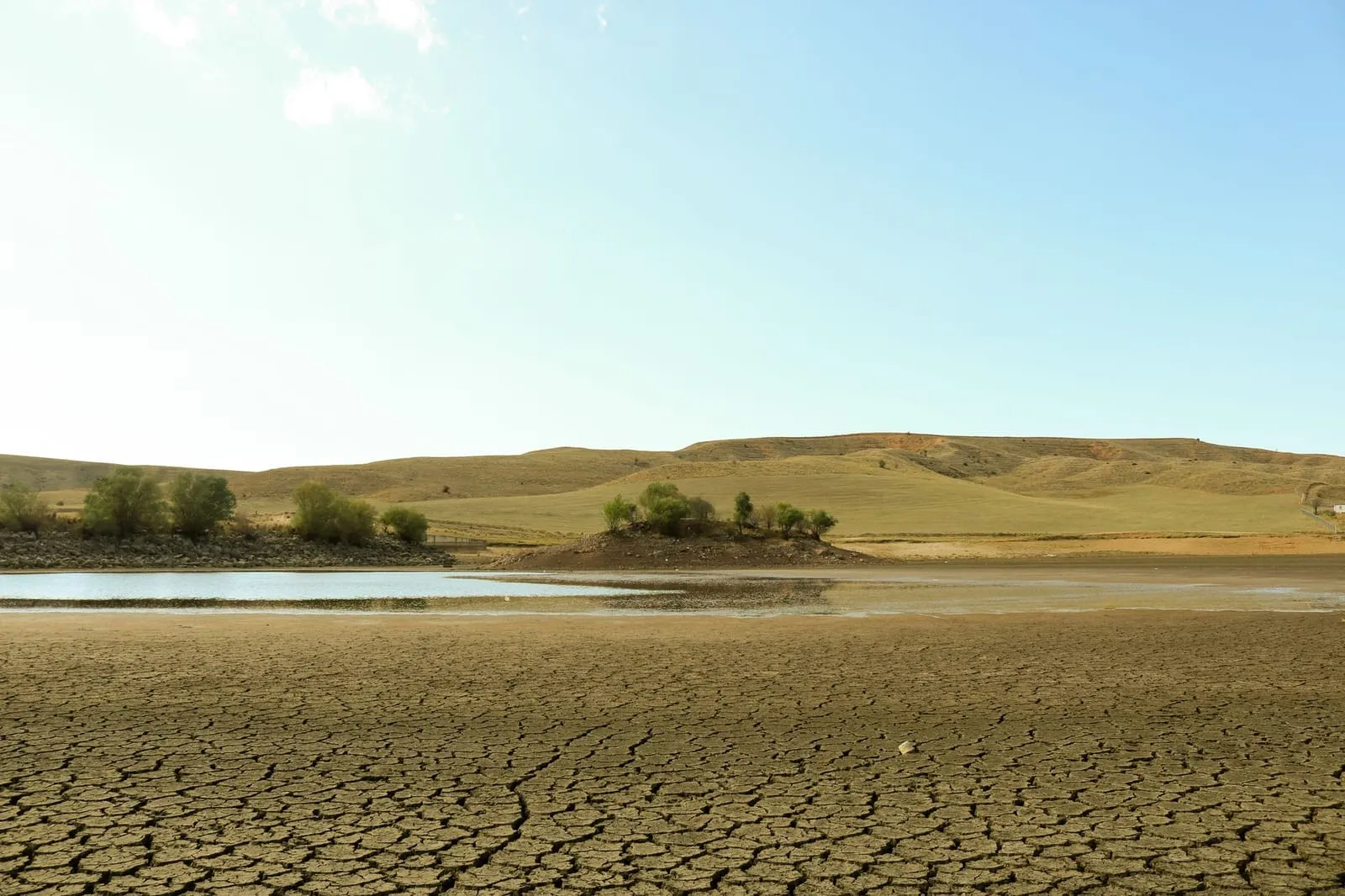
Global water security is facing a simultaneous crisis as extreme drought conditions force major cities to seek emergency water sources to replace depleting reservoirs.
This week in water
- Municipalities in Mumbai are facing significant challenges in managing fresh water reservoirs due to intensifying scarcity (urbanacres.in).
- To address strained local supplies, officials in Maryland have begun utilizing the Susquehanna River to supplement the regional water network (Patch).
- Baltimore City has activated emergency tapping of the Susquehanna River as drought conditions continue to impact its primary drinking water reserves (CBS News).
- While some parts of western North Carolina have seen minor relief, drought conditions remain persistent across much of the state (WUNC News).
- France is experiencing mounting pressure on its national drinking water networks due to ongoing drought patterns (Le Monde.fr).
- The transition to Susquehanna River water in Baltimore is a direct response to the depletion of existing reservoir storage (WMAR 2 News Baltimore).
- A significant groundwater drought alert has been issued in Poland, covering nearly the entire country (TVP World).
- Emergency water supply levels have been reached in Kittery as peak demand from the Portsmouth Naval Shipyard coincides with drought stress (The Maine Wire).
The physics of reservoir depletion
The news cycles from Mumbai to Baltimore to Poland illustrate a singular, systemic problem: the rapid loss of stored freshwater. When reservoirs decline, the immediate instinct for many municipalities is to find secondary sources, such as river tapping or groundwater extraction. However, these are often temporary fixes that do not address the fundamental rate of loss.
At the heart of this issue is evaporation. As surface water levels drop, the exposed surface area often remains large, and the energy required to transition water from liquid to gas is readily available in warming climates. This process is governed by complex interactions between solar radiation, wind speed, and vapor pressure deficits. For engineers and water managers, understanding how to calculate evaporation is no longer an academic exercise; it is a prerequisite for survival.
The Penman-Monteith equation remains the global standard for calculating these losses (Allen et al. 1998). This method accounts for both the energy balance (the heat available to drive evaporation) and the aerodynamic component (the efficiency with which wind removes moisture from the surface). As drought persists, the increased temperature and decreased relative humidity typically accelerate these losses, creating a feedback loop that can rapidly empty even large-scale municipal storages.
This feedback loop is driven by the atmosphere’s demand for moisture. When the air is dry and warm, the “vapor pressure deficit”—the difference between how much moisture the air can hold and how much it actually holds—increases. This drives more molecules of water out of the reservoir and into the air. Without physical intervention, a reservoir is essentially an open system constantly leaking its most precious resource to the sky.
Mitigation strategies and their limits
As cities like Baltimore and Kittery reach emergency thresholds, the conversation naturally shifts toward methods to reduce evaporation. Currently, water managers utilize a spectrum of technologies, ranging from low-cost biological interventions to high-performance engineered barriers.
Natural and biological approaches, such as using duckweed or various aquatic plants, offer a way to cover the surface without heavy infrastructure. However, these methods are often limited by scalability and regional biological constraints. Similarly, chemical monolayers—thin films of substances like cetyl alcohol—can provide a temporary reduction in evaporation of roughly 20–40% (Craig et al. 2005), but they are highly sensitive to wind and temperature and require frequent reapplication.
For more permanent or high-stakes infrastructure, physical barriers are the primary defense. These include:
- Shade balls: These HDPE spheres can achieve roughly 66–75% reduction in evaporation at 91% coverage based on field studies. They are effective but can impact the underlying water ecology.
- Suspended covers: Large-scale structures can block up to 85% of evaporation in field studies, though they require significant structural support and maintenance.
- Modular floating covers: These are becoming increasingly common in industrial and municipal applications. While standard modular tiles might see reductions of 65–80% in field settings (Mady et al. 2021), specialized high-coverage systems can reach much higher benchmarks. For instance, manufacturer data indicates that Hexprotect AQUA can provide up to 95% reduction (AWTT), while the Rhombo Hexoshield system can reach up to 98% (AWTT). These systems often provide additional benefits, such as wind resistance (up to 130 MPH for AWTT models) and sunlight blocking (up to 99% for Hexprotect AQUA).
- Continuous geomembranes: These provide a nearly complete seal (95%+) (Yao et al. 2021), but they present challenges regarding buoyancy management, maintenance of rain-pumps, and access to the water beneath.
The choice between these methods involves a trade-off between initial capital expenditure, maintenance requirements, and the required level of protection. For example, while chemical monolayers are cheap to apply, their failure during a prolonged heatwave can leave a city vulnerable. Conversely, a high-performance modular cover requires higher upfront costs but offers much greater reliability during the peak demand periods seen in Kittery.
Integrating storage management into urban planning
The recent drought alerts in Poland and effectively depleting groundwater in Europe suggest that the problem is moving beyond seasonal fluctuation into a period of structural instability. When groundwater is depleted, the reliance on surface reservoirs increases, making those reservoirs even more vulnerable to atmospheric loss. This necessitates a more holistic approach to storage management.
Effective management requires more than just finding new water; it requires “locking in” the water currently held. This involves a dual strategy: reducing the surface area exposed to the atmosphere and increasing the aerodynamic resistance to mass transfer. In many cases, this means integrating floating covers into the initial design of new reservoirs or retrofitting existing ones during periods of relative stability.
While high-capital solutions like floating solar (FPV) offer the dual benefit of generating power while reducing evaporation, they may not be feasible for every municipality. However, the cost of inaction—emergency river tapping, groundwater depletion, and the high cost of hauling water during shortages—must be weighed against the investment in evaporation mitigation.
Urban planners must also consider the long-term implications of reservoir design. As climate-driven evaporation rates increase, a reservoir designed with an open, high-surface-area configuration may become a liability rather than an asset. Moving forward, the ability to prevent the “invisible leak” of evaporation through a combination of better calculation, robust shielding, and smarter storage design will likely become a cornerstone of urban water resilience.
Frequently asked questions
- How much water can floating covers actually save?
- Modular floating covers typically reduce evaporation by 65–80% in field studies (Mady et al. 2021), while high-performance options like Rhombo Hexoshield can reach up to 98% reduction (AWTT).
- Are shade balls effective for large reservoirs?
- Shade balls can provide approximately 66–75% evaporation reduction at roughly 91% surface coverage according to field studies.