
How Floating Covers Help Control Algae and Improve Water Quality
Why blocking sunlight suppresses algae, the oxygen and gas-exchange trade-offs of full coverage, and how to weigh water-quality benefits against them.
By Editorial Team · Reviewed by Pending review ·
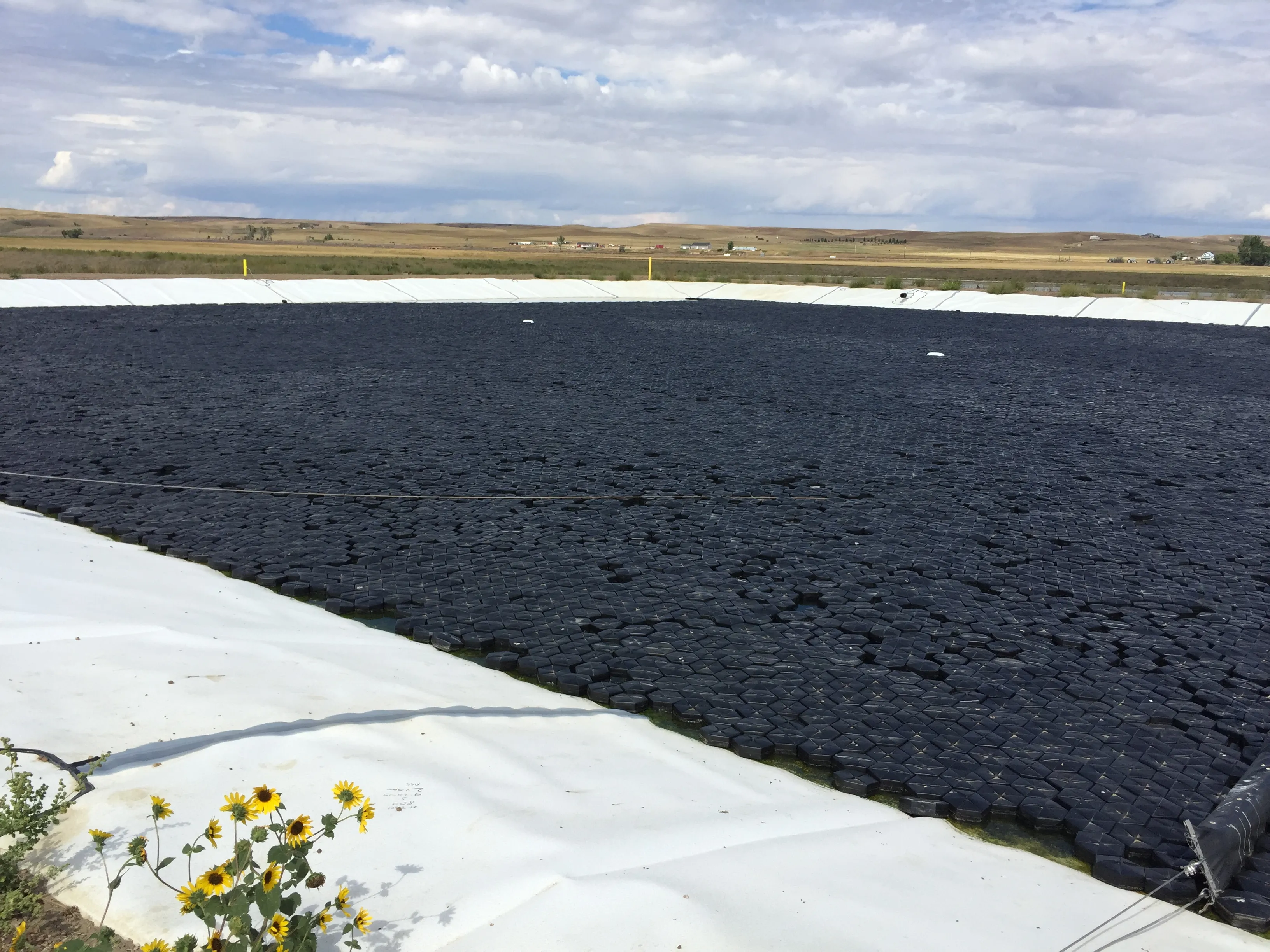
Floating covers are usually installed to stop evaporation, but many operators adopt them as much for a second benefit: algae control. The same barrier that blocks sun and wind also changes the light and gas environment of the water beneath it. Those changes are mostly helpful for water quality — but not entirely, and the trade-offs deserve a clear-eyed look.
Why blocking light suppresses algae
Algae and cyanobacteria are photosynthetic: they need sunlight to grow. Surface blooms also depend on warmth, which raises metabolic and growth rates. A floating cover attacks both:
- It removes the light algae need to photosynthesize. Cut the light enough and growth stalls, regardless of how much nutrient is in the water.
- It keeps the water cooler by reflecting and absorbing solar radiation before it reaches the surface — the same radiation-blocking that suppresses evaporation (see what is evaporation).
Because light is the limiting input you can physically remove, a high-coverage cover is an unusually direct lever on algae. As an example of how complete that light removal can be, AWTT cites ~99% sunlight blocking (AWTT) for its Hexprotect AQUA tiles at full coverage — and continuous geomembrane covers block essentially all light. Lower-coverage options (shade balls at roughly 91% coverage, partial plant cover) reduce light proportionally less and therefore suppress algae less completely.
The water-quality benefits beyond algae
Light and temperature control ripple into several quality improvements:
- Less algae means fewer taste-and-odor compounds (such as geosmin) and a lower risk of cyanotoxins — important for drinking-water reservoirs.
- Reduced photochemistry can slow some disinfection-byproduct precursor formation.
- Cooler water holds dissolved oxygen better and slows nuisance biological activity.
- By stopping evaporation, covers also stop the concentration of salts and nutrients that occurs as water leaves and dissolved load stays behind — a feedback that otherwise makes a shrinking pond increasingly bloom-prone.
The trade-off: oxygen and gas exchange
A cover that seals the surface also slows the natural exchange of gases between water and air. This is the genuine downside, and it scales with coverage:
- Reduced reaeration. Open water absorbs atmospheric oxygen at the surface; a near-complete cover cuts that pathway. In a water body that relies on surface reaeration, dissolved oxygen can decline, stressing fish and aerobic processes.
- Trapped gases. In ponds with high biological activity — wastewater lagoons, biogas or anaerobic ponds — covers can trap gases that must be vented or managed.
- Reduced light also reduces oxygen production. Algae are a nuisance, but submerged plants and beneficial phytoplankton also produce oxygen; remove the light and you remove that source too.
The severity depends heavily on the water body. A municipal raw-water reservoir with low biological oxygen demand tolerates full coverage well; a productive, fish-bearing or treatment pond may need partial coverage, aeration, or gas management to compensate.
Matching coverage to the goal
The design tension is straightforward: more coverage means more algae and evaporation control, but less gas exchange. Sensible practice:
- For drinking-water and process reservoirs where biology is low and algae/taste control is the priority, high coverage is usually the right call.
- For biologically active or fish-bearing ponds, consider partial coverage, supplemental aeration, or designs that allow controlled gas venting — and confirm dissolved-oxygen targets before committing.
- Modular systems offer flexibility here: coverage can be staged and elements repositioned, and load-bearing variants allow surface access for monitoring and aeration equipment.
Floating covers are a strong, direct tool for algae and water-quality control, but they are not a free lunch for every pond. Weigh the light-blocking benefit against the gas-exchange cost for your specific water body. For the broader comparison of cover types and how they rank on algae control, see the floating modular covers method page and methods to reduce evaporation.