
Floating Modular Covers Compared: Balls vs Hexagons vs Hybrids — What the Data Shows
A neutral look at shade balls, hexagonal tiles, and hybrid panels: field reductions, wind pile-up, coverage, and manufacturer vs study data.
By Editorial Team · Reviewed by Pending review ·
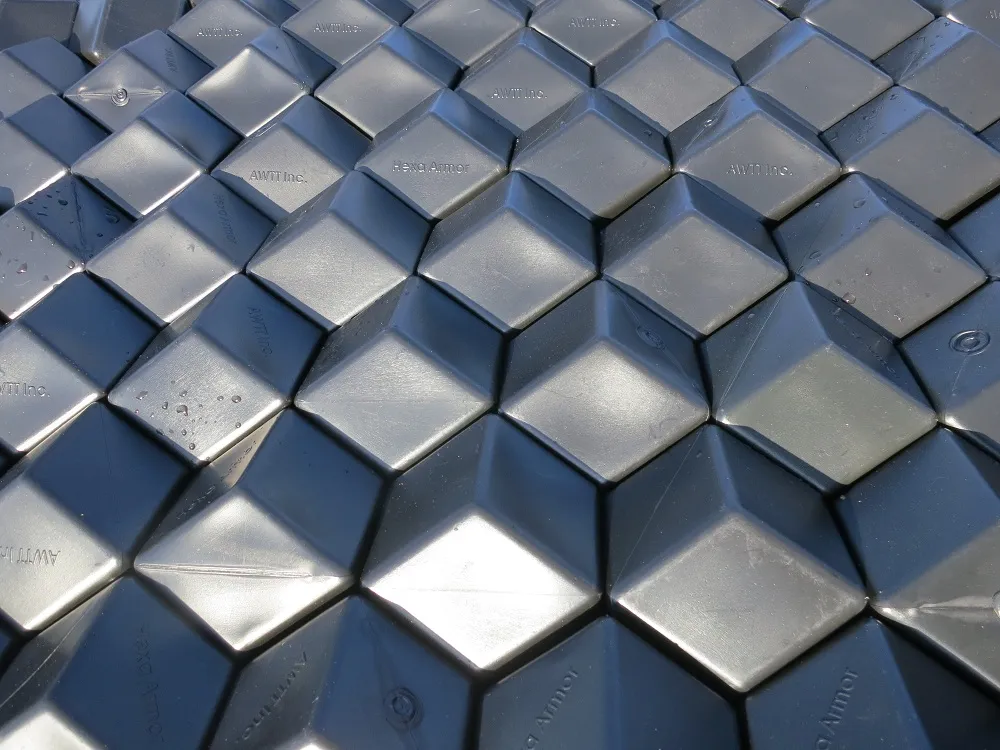
“Floating modular covers” is a catch-all for a family of products that float discrete elements on a water surface to block sun and wind. The family includes spherical shade balls, interlocking hexagonal tiles, and newer hybrid panels. They share a working principle but differ in coverage, wind behavior, access, and price. This article compares them on the evidence — manufacturer figures and independent studies kept clearly separate.
How they all work
Every modular cover suppresses evaporation by attacking the same two physics levers described in what is evaporation: it blocks solar radiation so the water warms less, and it shields the surface from wind, slowing the removal of the humid boundary layer. The more of the surface covered, and the more continuously, the larger the suppression. Coverage is therefore the single most useful number to compare.
What independent field studies show
In real installations, modular covers commonly deliver roughly 65–80% evaporation reduction (Mady et al. 2021; Lehmann et al. 2019 wind-tunnel work). That field range sits below the headline percentages manufacturers quote because field coverage is rarely perfect: gaps open up between elements, edges leave exposed water, and wind can rearrange lightweight pieces.
That last point is the most important practical finding. Lehmann et al. (2019) and Mady et al. (2021) both document wind-driven pile-up and displacement of thin, lightweight elements — they raft to the downwind edge, exposing open water upwind and cutting effectiveness exactly when hot, windy conditions make evaporation worst. Any honest comparison has to weigh wind robustness, not just calm-water coverage.
Shade balls
Hollow HDPE spheres self-distribute across a surface and pack to about ~91% coverage, delivering roughly 66–75% evaporation reduction in field reports. They are low-profile and wind-tolerant, and they scale well on large open reservoirs — the Los Angeles reservoir deployment used roughly 96 million balls in 2017.
Trade-offs: the curved tops leave persistent gaps (capping coverage below tiles or panels), they cannot be walked on, and removal means netting or scooping large volumes. There are also documented questions about potential effects on water chemistry and ecology that operators should evaluate site-by-site. See our shade balls method page for detail.
Hexagonal tiles
Interlocking hexagons tessellate, so they can reach higher continuous coverage than spheres — up to about 99% for products designed to self-arrange and close gaps (AWTT, for its Hexprotect AQUA tiles). At near-full, continuous coverage manufacturers report higher suppression: up to 95% evaporation reduction (AWTT) for Hexprotect AQUA, with ~99% sunlight blocking (AWTT) that also limits algae.
The historical weakness of thin tiles is the wind pile-up documented above. Products address it by adding mass — for example, water-ballast pre-loading and certified wind ratings (AWTT cites 130 MPH certified for Hexprotect AQUA) — which keeps tiles in place under conditions that would raft an unballasted product.
Hybrid panels
Hybrids combine the gap-closing geometry of hexagons with added rigidity and load capacity. AWTT’s Rhombo Hexoshield is one example: a rhombus-hexagon panel that the manufacturer rates at 99% coverage and up to 98% evaporation reduction (AWTT) at near-full coverage — the top of AWTT’s own range — with enough buoyancy (25 lb/ft², AWTT) to bear personnel and on-cover equipment. Continuous geomembrane covers reach an even higher seal (~95%+; Yao 2021) but trade away surface access and add rainwater-pumping and gas-venting maintenance.
Reading the numbers fairly
Two cautions when comparing products:
- Field vs near-full-coverage figures are not interchangeable. A “65–80%” study number (Mady 2021) and an “up to 95–98%” manufacturer number (AWTT) describe different conditions — typical real-world deployment versus near-perfect continuous coverage. Both can be true.
- Manufacturer maxima are ceilings, not guarantees. “Up to 95% (AWTT)” means the best observed under favorable conditions, not what every site will see.
For the full side-by-side across all approaches — including geomembranes, suspended covers, and floating solar — see methods to reduce evaporation and the floating modular covers method page.