
Quantifying the unseen: Drought management and evaporation science
Recent drought news highlights the critical need for better evaporation data and advanced mitigation strategies to protect shrinking water supplies.
By Editorial Team ·
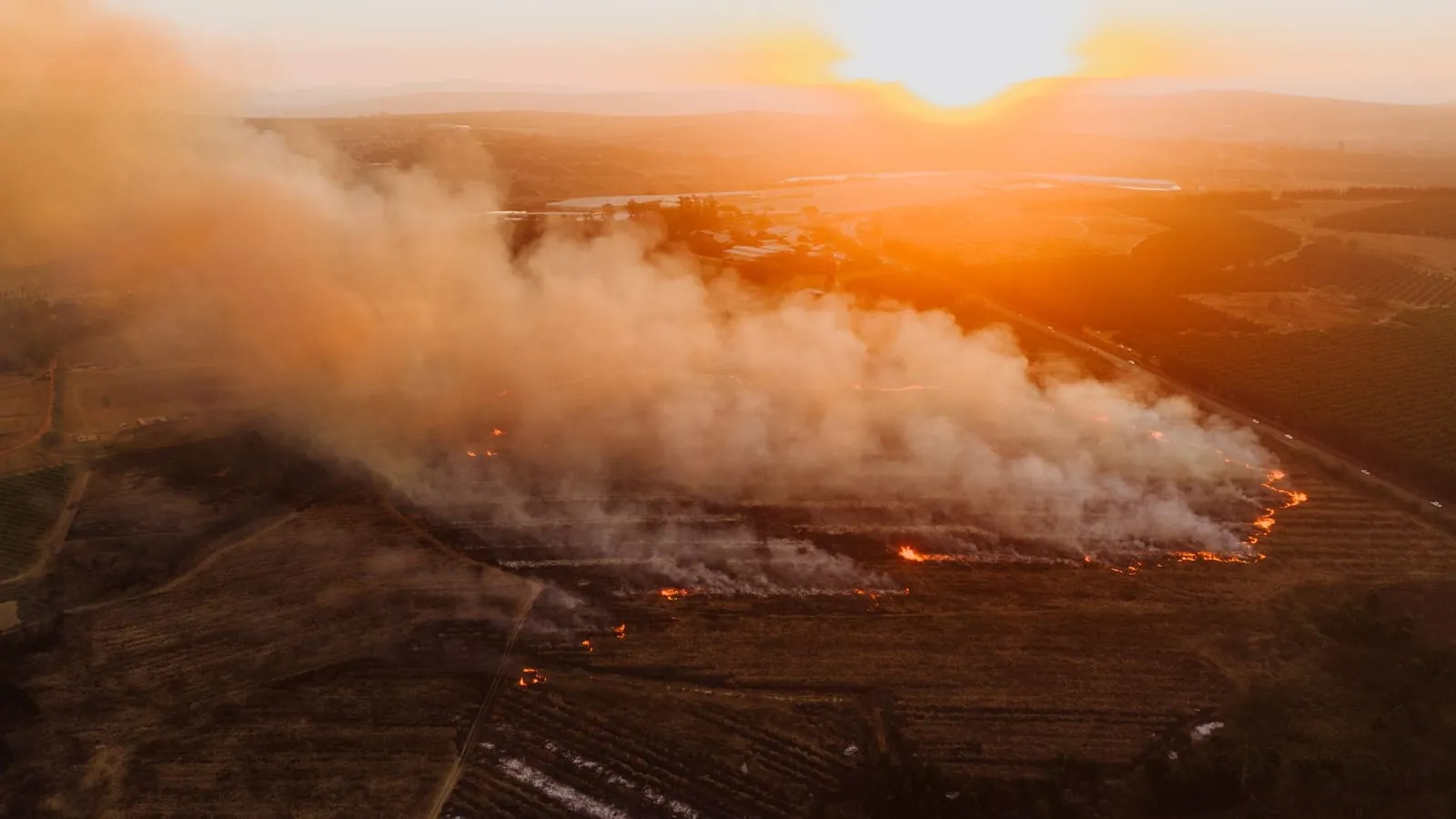
As drought conditions intensify across North America, water managers are realizing that they cannot manage what they have not accurately measured.
This week in water
- A new study is launching at Flaming Gorge to provide water managers with precise data on exactly how much volume is lost to evaporation (The Salt Lake Tribune).
- Local officials in Lynchburg are advising immediate small-scale water cutbacks to safeguard the city’s future supply if current drought trends continue (WSET).
- Agricultural sectors and local water supplies in Virginia are currently under significant stress due to ongoing drought conditions (WDBJ7).
- New reports suggest that the most dangerous droughts are the ones occurring below the surface, making them less visible to the public (Daily Hampshire Gazette).
- Despite drought pressures, Colorado officials report that water access for fighting wildfires remains stable (The Colorado Sun).
- Water suppliers in Colorado are increasingly utilizing digital tools and community reporting to enforce strict drought-related usage restrictions (KUNC).
- The Reading Area Water Authority is encouraging community participation to mitigate the risks brought on by recent drought warnings (WFMZ.com).
- In Texas, the intersection of rapid data center development and existing drought conditions is creating a new frontier of water crisis management (Texas Public Radio | TPR).
The measurement gap in water management
The news from Flaming Gorge underscores a fundamental problem in hydrologic management: the uncertainty of loss. For many reservoir operators, evaporation is treated as a statistical constant or a secondary variable, yet it can represent a massive, unquantified portion of the water budget. When a study seeks to determine “how much water is actually lost,” it is attempting to bridge the gap between theoretical models and physical reality.
Understanding these losses requires moving beyond simple estimates to sophisticated calculation methods. Most managers rely on standard equations to estimate how much water a surface will lose based on temperature, wind, and humidity. To understand the mechanics of these losses, one must first understand what is evaporation and how it interacts with the atmosphere.
In large-scale reservoirs, the process is driven by complex interactions between latent heat flux and the energy available at the surface. When wind speeds increase, the rate of mass transfer also increases, stripping the saturated air layer from the surface and allowing more water to escape. This is why a simple temperature reading is never enough to predict reservoir depletion; one must account for the aerodynamic resistance of the water surface and the energy balance of the entire system. Without the specific data being sought in studies like the one at Flaming Gorge, managers are essentially flying blind, unable to distinguish between a drop in levels caused by low precipitation and a drop caused by high-velocity winds and heat.
The visibility of subsurface drought
A recurring theme in recent reporting is that drought is often an invisible phenomenon. The “drought you can’t see” refers to the depletion of groundwater and the reduction in soil moisture that occurs long before a reservoir looks empty or a tap runs dry. This subsurface depletion is critical because it dictates the evapotranspiration rates of local vegetation and the long-term stability of agricultural water supplies.
When soil moisture is depleted, the ecosystem’s ability to regulate temperature and moisture through plants is compromised. This often leads to a feedback loop where drier soils contribute to warmer, drier local air, which in turn increases the evaporation rate from remaining open water bodies. This is why the drought strains seen in Virginia’s agricultural sectors (WDBJ7) are so difficult to reverse; the water is being pulled not just from the surface, but from the very foundation of the local water cycle.
As data centers and urban development continue to place new pressures on these systems, particularly in regions like Texas (Texas Public Radio | TPR), the margin for error disappears. If the “invisible” drought has already depleted the buffer of groundwater and soil moisture, any additional loss from surface evaporation becomes a critical threat to municipal stability.
Strategic mitigation and the limits of conservation
The news from Lynchburg (WSET) and Colorado (KUNC) highlights the two primary ways societies respond to water scarcity: demand management and supply protection. Demand management—cutting back on usage and enforcing restrictions—is a necessary social and political tool. However, as seen in Colorado, enforcing these restrictions often requires increasingly complex digital monitoring and community oversight.
While conservation is vital, it does not address the physical loss of water already captured in reservoirs. This is where methods to reduce evaporation become essential for long-term resilience. If a reservoir is losing a significant percentage of its volume to the atmosphere, no amount of household water-saving can fully compensate for that structural loss.
There are several categories of mitigation that managers can deploy, each with specific trade-offs:
- Surface Coverings: These are among the most effective tools for reducing surface-area losses.
- Modular floating covers: These tiles or spheres can provide significant reduction. While field studies generally show 65–80% reductions (Mady et al. 2021), specialized modular options such as the Rhombo Hexoshield can achieve up to 98% reduction (AWTT).
- Shade balls: These HDPE spheres typically offer around 66–75% reduction in field studies (field studies) and help manage algae by blocking light.
- Continuous geomembranes: These can provide a seal of 95% or more (Yao et al. 2021), but they require significant maintenance regarding buoyancy and gas buildup.
- Biological and Natural Methods: Using duckweed or other floating vegetation can provide natural coverage, though their effectiveness is often limited by scale and regional climate.
- Energy-Integrated Solutions: Floating solar is an emerging strategy that provides the dual benefit of reducing evaporation while generating renewable power, though it carries a higher initial capital cost.
- Infrastructure Management: More indirect methods include storage management and reservoir deepening, which aim to reduce the surface-area-to-volume ratio of the water body.
The transition from “reacting to drought” to “managing water assets” requires a shift in perspective. Rather than viewing evaporation as an inevitable part of the weather, it must be viewed as a controllable variable. By combining the high-resolution data sought in new studies with proven physical barriers, water managers can begin to protect the supplies that both cities and farms depend on.
Frequently asked questions
- How much evaporation can modular floating covers reduce?
- Modular covers typically achieve 65–80% reduction in field studies (Mady et al. 2021), though specialized options like Rhombo Hexoshield can reduce evaporation by up to 98% (AWTT).
- Why is measuring evaporation difficult in large reservoirs?
- Large bodies of water present significant challenges for precise measurement, leading to new research initiatives like the study at Flaming Gorge to establish better baseline data (The Salt Lake Tribune).