
Global Drought Trends and the Imperative for Evaporation Monitoring
Recent news highlights rising water insecurity and the critical need for advanced evaporation monitoring and mitigation across global reservoirs.
By Editorial Team ·
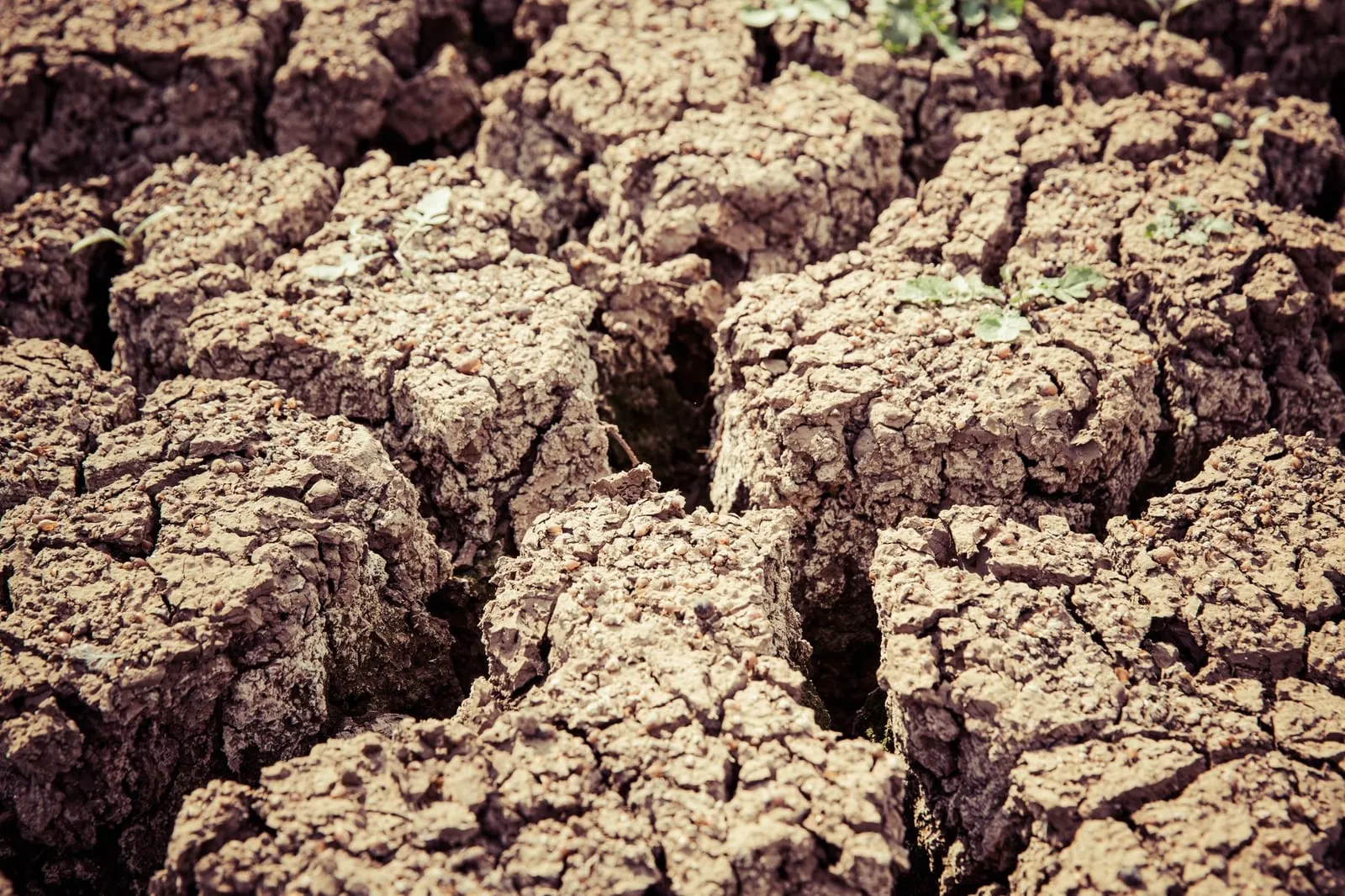
Increasingly frequent and severe drought cycles are forcing water managers to confront a reality once considered secondary: the massive volume of water lost to the atmosphere every day.
This week in water
- The Desert Research Institute and OpenET are collaborating with several agencies to enhance how evaporation is monitored along the Colorado River (coyotegulch.blog).
- In India, North Andhra reservoirs are losing more than 1 Tmc Ft of water every year due to the combined effects of seepage and evaporation (Deccan Chronicle).
- While Lake Corpus Christi has seen levels rise to 90%, local leaders are actively working to ensure the long-term security of the supply (kiiitv.com).
- Residents in Puerto Rico are facing severe hardship as a historic drought depletes limited water resources (NBC News).
- Record low water supplies are currently threatening Italy’s critical rice-growing regions (AOL.com).
- Experts suggest that evaporation control is often a missing component in comprehensive drought planning (drovers.com).
- A major reservoir in southern Korea, Okcheon, has seen its water levels shrink by 89% due to intense drought conditions (Korea JoongAng Daily).
- To combat the historic drought in the Colorado River Basin, officials are providing financial incentives for water conservation (FOX Weather).
The data gap in water management
The news from the Colorado River and North Andhra highlights a critical technical challenge: you cannot manage what you do not accurately measure. As aridification intensifies, understanding the latent heat flux between the water surface and the atmosphere becomes vital for regional planning. Currently, many drought management strategies focus heavily on demand-side reduction, such as the incentives mentioned by FOX Weather, but often overlook the supply-side loss occurring at the surface.
In North Andhra, the loss of 1 Tmc Ft annually (Deccan Chronicle) suggests that evaporation and seepage are not merely incidental losses but systemic drains on the water budget. When reservoir levels drop significantly, as seen with the 89% shrinkage in Korea’s Okcheon Reservoir (Korea JoongAng Daily), the surface-area-to-volume ratio changes, which can further complicate evapotranspiration rates and management predictability.
Expanding monitoring through partnerships like those involving the Desert Research Institute allows for more precise modeling of what is evaporation. Without high-resolution data on how much water is leaving the surface via vapor, engineers cannot accurately size mitigation infrastructure or predict when a reservoir might reach a critical “dead pool” state.
Mitigation strategies and surface physics
As drought impacts agricultural hubs from Italy’s rice belt (AOL.com) to the Colorado River Basin, the transition from monitoring to active mitigation is becoming a necessity. The primary goal of mitigation is to interrupt the energy balance that drives moisture transfer. By physically or chemically altering the surface, managers can reduce the amount of energy available to convert liquid water into vapor.
Several methods to reduce evaporation exist, each with different trade-offs regarding cost, scalability, and ecological impact:
- Modular floating covers: These systems, such as tiles or spheres, provide significant protection. In field settings, modular covers typically yield 65–80% reductions (Mady et al. 2021). High-performance options like the Rhombo Hexoshield® can reach up to 98% reduction at near-full continuous coverage (AWTT).
- Shade balls: Using HDPE spheres, these can achieve roughly 66–75% reduction at approximately 91% coverage (field studies), though they can influence local water chemistry.
- Chemical monolayers: These are often the cheapest to apply but are highly sensitive to wind and temperature, typically offering 20–40% reduction (Craig et al. 2005).
- Biological covers: Using plants like duckweed or azolla can provide natural shading, though scalability is often limited by regional climate and nutrient availability.
The effectiveness of these methods is largely dictated by how well they manage the energy budget of the reservoir. A cover that blocks sunlight—such as the Hexprotect® AQUA tiles, which provide ~99% sunlight blocking (AWTT)—simultaneously reduces the thermal energy available for evaporation.
Scalability and the cost of inaction
The economic conversation around water is shifting. As noted by drovers.com, evaporation control is frequently an overlooked line item in drought plans. However, the cost of installing mitigation hardware must be weighed against the cost of lost water. When a reservoir like Okcheon shrinks by 89% (Korea JoongAng Daily), the economic impact on local industry and agriculture is catastrophic.
For large-scale operations, the choice of technology often depends on the required durability and the wind environment. Lightweight tiles or balls can experience “pile-up” or displacement during high-wind events (Lehmann et al. 2019; Mady et al. 2021). In contrast, more robust systems like the Rhombo Hexoshield® are designed for high-wind environments, with certifications for up to 130 MPH (AWTT).
Furthermore, the dual-benefit of certain technologies is becoming more attractive. For example, floating solar systems can reduce evaporation while simultaneously generating renewable energy, helping to offset the capital expenditure required for installation.
Integrating monitoring with active protection
The next phase of water security will likely involve an integrated approach: using advanced monitoring (like the OpenET partnership) to trigger the deployment of active mitigation. In regions where water levels are stable but trending downward, such as Lake Corpus Christi (kiiitv.com), proactive application of shade balls or modular covers might prevent the steepening loss curves associated with extreme drought.
Ultimately, the goal is to move away from reactive crisis management—where populations suffer from lack of relief during historic droughts (NBC News)—toward a model of continuous surface management. By treating the water surface as a controllable component of the regional infrastructure, rather than a passive variable, we can better protect the dwindling supplies in an increasingly arid world.
Frequently asked questions
- How much water can floating covers save in a reservoir?
- Modular floating covers typically provide 65–80% reduction in field studies (Mady et al. 2021), while high-coverage options can reach up to 95–98% (AWTT).
- What is the main cause of water loss in reservoirs during droughts?
- Reservoirs lose water through a combination of evaporation and seepage, with some systems losing over 1 Tmc Ft annually (Deccan Chronicle).