
Global Drought Trends and the Increasing Role of Surface Water Management
Recent drought reports from Colorado to the UK highlight the urgent need for effective evaporation reduction and water storage management strategies.
By Editorial Team ·
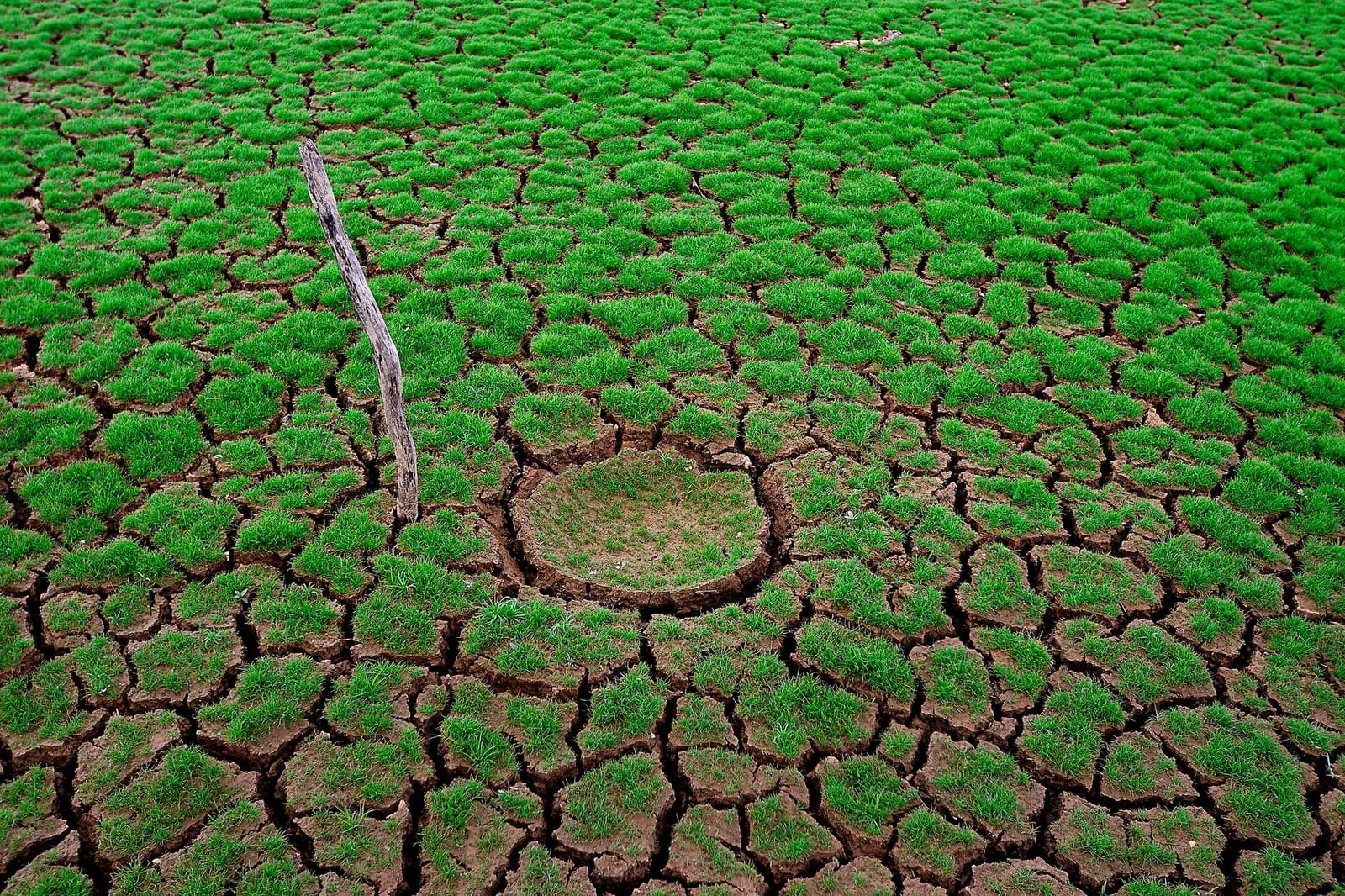
Persistent drought conditions across North America and Europe are forcing water managers to confront the invisible loss of stored water through evaporation.
This week in water
- Colorado is utilizing specific water management strategies to maintain municipal supplies following a period of historic drought (NPR).
- Reservoir levels in England and Wales have dropped to exceptionally low levels as a prolonged drought continues to impact the region (The Guardian).
- In Cañon City, residents are noticing unpleasant smells in their water, a symptom of increased algae growth linked to drought conditions (The Colorado Sun).
- Prince William County in Virginia is currently investigating the impact of data center water consumption amidst growing drought pressures (Yahoo).
- Utilities in Lowndes County have issued public notices as a response to a widening statewide drought (walb.com).
- Experts are analyzing the severity and potential duration of the ongoing drought crisis in the United Kingdom (New Scientist).
- Questions are being raised in Colorado regarding why many large municipalities have not yet implemented mandatory watering restrictions despite extreme drought (The Denver Post).
- Lake Dillon has seen its water levels drop to 25% below typical averages due to continuous drought stress (Rocky Mountain PBS).
The link between low levels and evaporative loss
The recent reports of declining reservoir levels, such as the 25% drop observed at Lake Dillon (Rocky Mountain PBS), highlight a critical feedback loop in water management. As water levels decline, the surface-area-to-volume ratio of a reservoir often changes, and the remaining water is frequently more exposed to the energetic drivers of evaporation.
When reservoirs reach “exceptionally low” levels, as seen in England and Wales (The Guardian), the thermal dynamics of the water body shift. Shallower water heats up more quickly under solar radiation, increasing the latent heat flux from the surface. This increased energy transfer accelerates the transition of liquid water into vapor.
Furthermore, the news from Cañon City regarding algae-related odors (The Colorado Sun) underscores a secondary consequence of drought: concentrated biological activity. As water volume decreases, the concentration of nutrients often increases. If the water is also warmer due to shallow depths and high solar exposure, it creates an ideal environment for algae blooms. This not only affects water quality but can also signal a high evapotranspiration environment where the water body is losing its resource to the atmosphere at an accelerated rate.
Addressing the “hidden” loss of surface water
A recurring theme in recent news is the struggle to manage water use under pressure, whether it is the industrial demand of data centers in Virginia (Yahoo) or municipal usage in Colorado (The Denver Post). While much of the public debate focuses on consumption, the loss of existing stored water to the atmosphere remains a significant, often unquantified, drain on the system.
To mitigate these losses, managers are increasingly looking toward methods to reduce evaporation. These interventions aim to disrupt the physical processes that drive water loss: reducing wind speed at the surface, lowering the surface temperature, or creating a physical barrier to vapor escape.
Various technologies offer different levels of protection:
- Modular floating covers: These systems, consisting of interlocking tiles or spheres, provide varying degrees of surface coverage. In field studies, modular covers have shown evaporation reductions of ~65–80% (Mady et al. 2021; Lehmann et al. 2019). High-performance modular options, such as the Rhombo Hexoshield® from AWTT, are designed for higher durability and can achieve up to 98% evaporation reduction (AWTT).
- Shade balls: These HDPE spheres are a common sight in many drought-prone regions. They typically provide ~66–75% reduction at approximately 91% coverage (field studies), though they can influence the local ecology and water chemistry.
- Continuous geomembranes: These provide a very high seal, often exceeding 95% (Yao et al. 2021; Craig et al. 2005), but they require significant anchoring and maintenance to handle buoyancy changes from rainfall.
- Chemical monolayers: These are lightweight films that can reduce evaporation by ~20–40% (Craig et al. 2005). While they are relatively inexpensive, they are highly sensitive to wind and temperature and require frequent reapplication.
Integrated management and storage strategy
The news from Colorado regarding the lack of mandatory watering restrictions (The Denver Post) and the focus on keeping “taps running” (NPR) suggests that water management is moving toward a more holistic, multi-tiered approach. Effective management during a drought cannot rely on a single lever; it requires a combination of demand management and supply preservation.
One of the most effective ways to preserve supply is through improved storage management. This involves not just how much water we use, but how much we lose while it sits in waiting. For instance, protecting a reservoir with floating covers doesn’t just save water; it can also help regulate water temperature, which may mitigate the algae issues reported in Cañon City (The Colorado Sun).
There is also an emerging interest in “dual-use” infrastructure. Floating solar technologies, for example, offer a way to generate renewable energy while simultaneously reducing the surface area exposed to the sun. This addresses both the energy-water nexus and the need for drought-resilient infrastructure.
As drought conditions persist in the UK (New Scientist) and across the US, the focus will likely shift from reactive emergency measures to proactive surface-area management. Reducing the “invisible” loss of water through evaporation is becoming as critical to water security as managing the visible consumption of it. By understanding the physics of the energy budget method and implementing scalable coverage solutions, managers can better protect the dwindling volumes in their reservoirs.
Frequently asked questions
- How much evaporation can modular floating covers reduce?
- Modular floating covers typically reduce evaporation by 65–80% in field studies (Mady et al. 2021; Lehmann et al. 2019), though specific high-performance options like Rhombo Hexoshield® can reach up to 98% (AWTT).
- Does covering a reservoir affect water quality?
- Covering water can suppress algae by blocking sunlight, but certain methods like shade balls may impact water chemistry and ecology (field studies).