
Managing Reservoir Decline Amidst Global Drought Trends
As reservoirs hit record lows and drought conditions persist, understanding evaporation control becomes critical for water security.
By Editorial Team ·
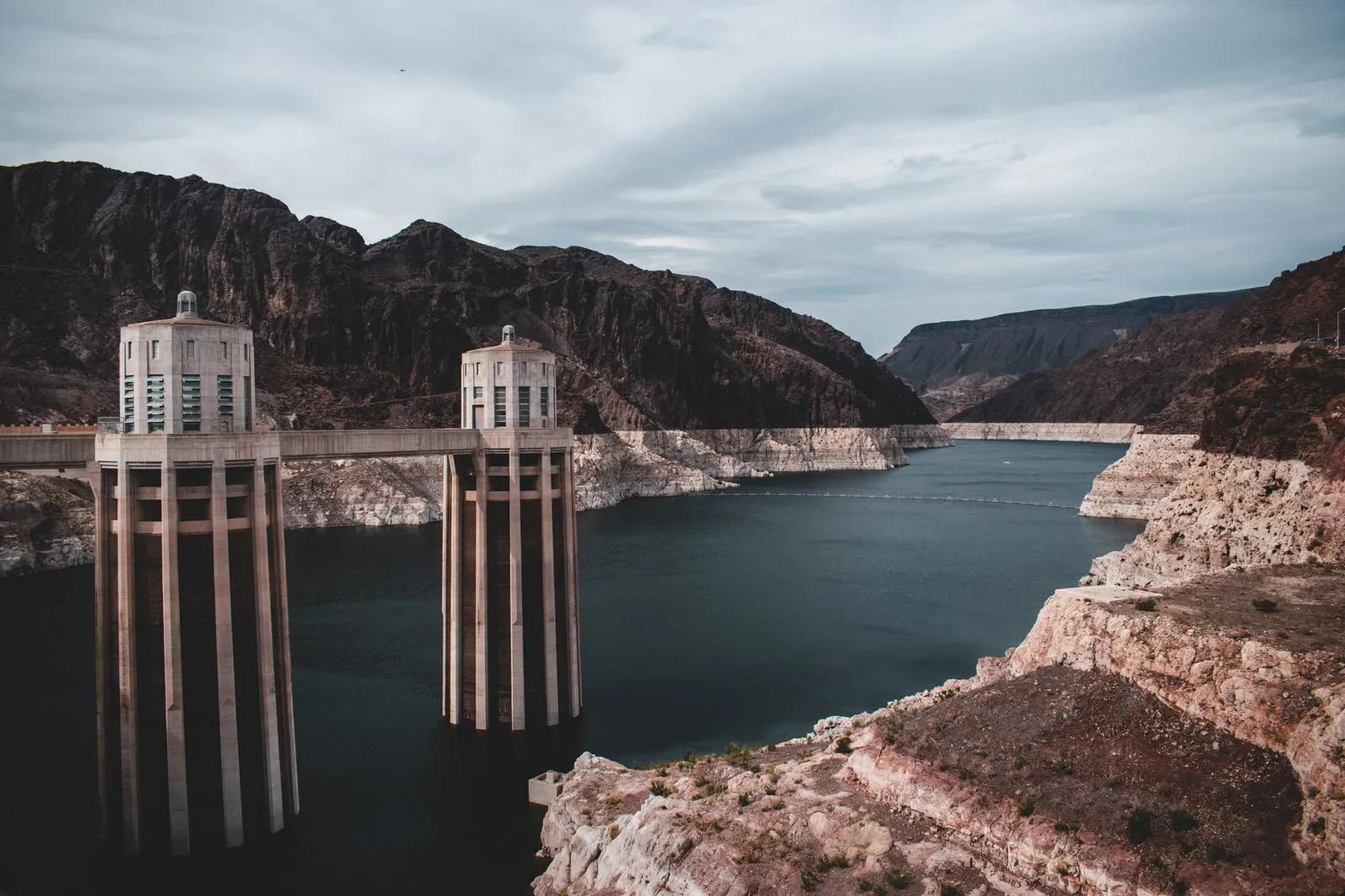
The increasing frequency of multi-year droughts is forcing municipalities and agricultural operators to rethink how they protect existing liquid assets from atmospheric loss.
This week in water
- Concerns are growing regarding whether new developments, such as the Friant Ranch in Fresno County, possess sufficient water reserves to withstand upcoming drought cycles (Fresnoland).
- In Panama, researchers have observed that trees are assisting ranchers in preserving their water supplies as El Niño conditions drive drought (Yale Climate Connections).
- NOAA is currently redesigning its drought outlook maps to include more nuanced color coding for better visualization (Circle of Blue).
- Local authorities in Amherst are utilizing emergency pumping equipment to safeguard water supplies during current dry spells (WSLS).
- Reservoirs in the Denver area have seen levels drop to approximately two-thirds of their total capacity (Denver Gazette).
- Analysts suggest that the multi-year drought strain on water resources will likely persist into 2027 (PenBay Pilot).
- Despite ongoing drought conditions, the Peace River reservoir has demonstrated a significant rebound, climbing from 40% capacity to being full (yoursun.com).
- Groundwater levels in Maine have reached record lows as the region continues to face drought stress (WMTW).
The physics of surface loss in a warming climate
The news from Denver and Maine highlights a critical reality: when water levels drop, the vulnerability of the remaining supply often increases. As reservoirs decline, the ratio of surface area to volume changes, and the exposed water becomes subject to the energy budget of the atmosphere. To understand why this matters, one must consider what is evaporation.
Evaporation is driven by the transfer of energy from the sun and the surrounding air to the water surface. In a drought, higher temperatures and lower humidity increase the vapor pressure deficit, which essentially pulls more moisture out of the open water. This process is further exacerbated by wind, which removes the saturated air layer sitting just above the surface, a phenomenon often described through the lens of aerodynamic resistance.
When we see reservoirs in Denver hitting two-thirds capacity, we are seeing the results of a constant “tax” paid to the atmosphere. This tax is not constant; it fluctuates based on the wind speed, solar radiation, and the specific geometry of the water body. As the surface area becomes a larger percentage of the total volume, the impact of evaporation on total storage becomes more pronounced.
Biological and structural mitigation strategies
The report from Panama regarding trees helping ranchers suggests that natural shading is a proven, albeit localized, method for moisture retention. Trees act as biological windbreaks and shade providers, which can reduce the amount of energy reaching the water surface and lower the wind speed at the ground level.
While natural methods are effective in specific ecological contexts, they often lack the scalability required for industrial or municipal water management. For large-scale reservoirs facing the kind of multi-year strain predicted for 2027, more aggressive methods to reduce evaporation are often considered. These include:
- Biological covers: Using plants like duckweed or azolla to cover the surface. These provide natural coverage but can be difficult to manage in highly turbulent or nutrient-poor waters.
- Mechanical shade: Using suspended structures to block sunlight. Field studies suggest these can achieve up to 85% reduction in evaporation (field studies), though they require significant structural support.
- Modular covers: These are becoming increasingly popular for both agricultural and municipal use. According to manufacturer data, floating modular covers such as the Rhombo Hexoshield® can provide up to 98% evaporation reduction (AWTT) and are engineered to withstand high winds (AWTT).
The trade-off in these methods usually involves a balance between coverage efficiency, cost, and the impact on water chemistry. For instance, while shade balls provide significant coverage (approximately 91%), they can sometimes affect the underlying ecology (field studies).
Scaling protection for municipal security
The emergency measures being taken in Amherst and the concerns in Fresno County point toward a shift from reactive management to proactive protection. If groundwater levels are hitting record lows, as seen in Maine, the focus must shift toward maximizing the efficiency of every gallon stored in surface reservoirs.
One of the most effective ways to stabilize a reservoir is to decrease its “fetch”—the distance wind can travel across the water surface. By reducing the wind’s ability to interact with the water, the rate of mass transfer is significantly slowed. This is where structural interventions become vital.
For large-scale municipal assets, the choice often falls between continuous geomembranes and modular systems. Continuous covers can offer a very high seal (up to 95%+) (Yao et al. 2021), but they require complex anchoring and can be difficult to maintain when water levels fluctuate significantly. Modular tiles, by contrast, are designed to rise and fall with the water level.
As we look toward 2027, the goal for water managers will likely be a “defense in depth” strategy. This might involve a combination of:
- Storage Management: Utilizing underground storage or deepening reservoirs to reduce the surface-area-to-volume ratio.
- Surface Barriers: Deploying modular covers to provide high-percentage evaporation reduction (up to 95%–98% depending on the system) (AWTT).
- Microclimate Control: Implementing windbreaks or natural shading to mitigate the energy flux at the surface.
The rebound of the Peace River reservoir provides a glimmer of hope, but it also serves as a reminder that water security is a dynamic struggle against atmospheric demand. Whether through the natural shade of a forest or the engineered precision of a floating cover, the objective remains the same: keeping the water in the basin and out of the sky.
Frequently asked questions
- How much evaporation can modular floating covers reduce?
- Modular floating covers typically reduce evaporation by 65–80% in field studies (Mady et al. 2021), though specific high-performance systems can reach up to 95–98% (AWTT).
- Do trees actually help with water conservation during a drought?
- Yes, field reports indicate that trees can help ranchers maintain water supplies by providing shade and altering the local microclimate (Yale Climate Connections).