
Drought Volatility and the Challenges of Measuring Open Water Loss
Recent drought developments across the US highlight the difficulty of quantifying water loss and the urgent need for effective evaporation management.
By Editorial Team ·
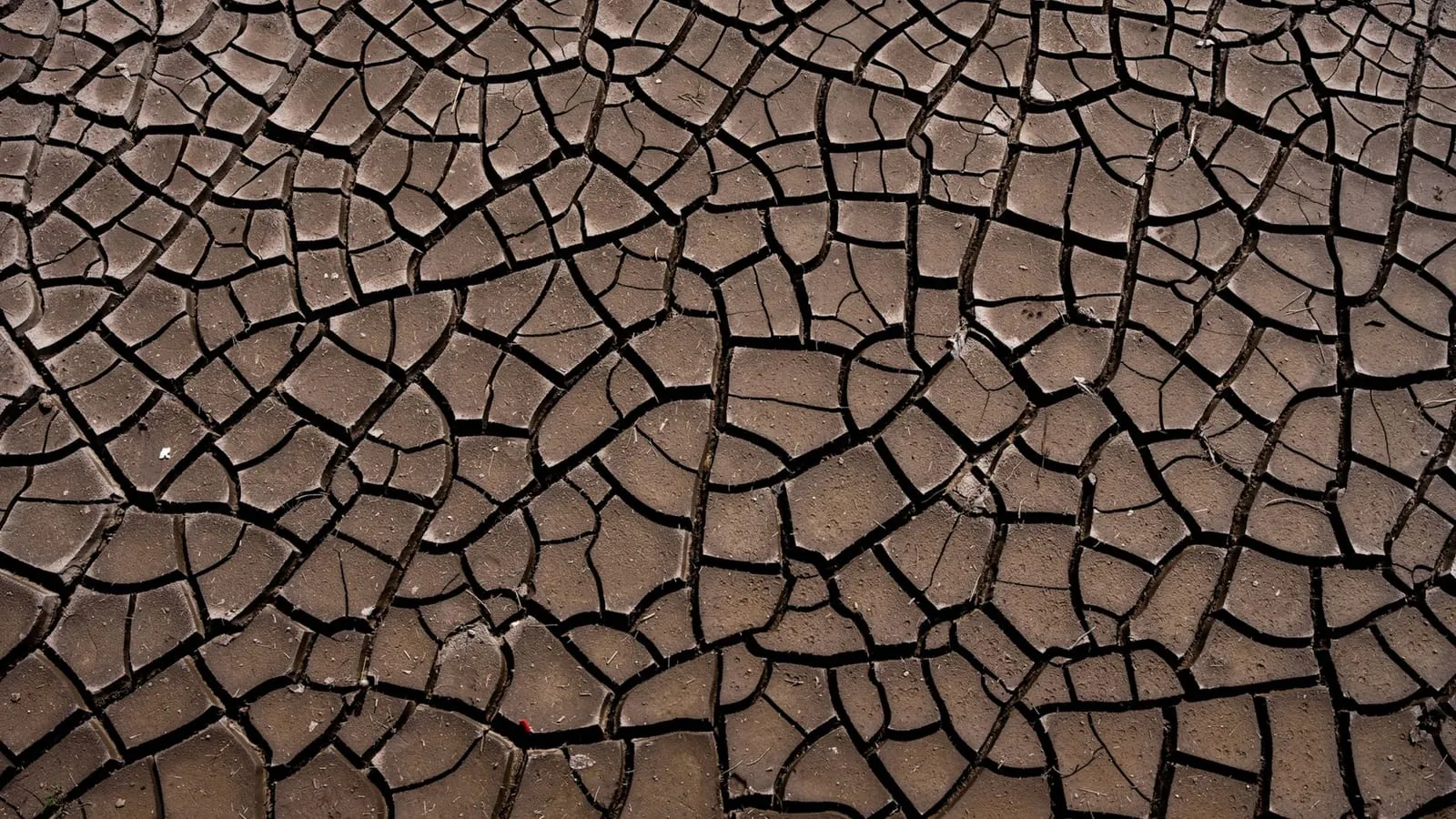
Recent drought conditions across several US states have highlighted the critical difficulty of accurately quantifying how much water is lost to the atmosphere from our essential reservoirs.
This week in water
- Disagreements persist regarding the exact rate of water loss from Lake Powell due to the complexities of evaporation modeling (WorldAtlas).
- Drought conditions in North Carolina are worsening, causing significant concern for business and municipal leaders in Durham (ABC11 News).
- New Jersey has ended its statewide drought warning following a summer characterized by higher rainfall levels (WaterWorld).
- In North Carolina, recent updates indicate that drought is intensifying in both the Piedmont and coastal plain regions (WUNC News).
- Water management discussions in Falmouth are centering on the intersection of drought, regional development, and long-term supply security (CapeNews.net).
- Officials in Hampton Roads are calling for increased conservation as reservoir levels continue to decline (13newsnow.com).
- Severe drought conditions in Middle Tennessee have prompted two cities to issue urgent water conservation requests (WKRN News 2).
- A drought in Maine has complicated emergency response efforts, straining the water supply during active wildfire suppression (newscentermaine.com).
The measurement gap in water management
The news from Lake Powell illustrates a fundamental problem in hydrologic science: we cannot always agree on how much water is actually leaving the surface. This is not merely a matter of academic debate; it is a central challenge for storage management and long-term planning. When officials cannot precisely quantify the latent heat flux or the energy required to convert liquid water to vapor, they struggle to predict when a reservoir might hit critical lows.
This uncertainty is compounded by the fact that evaporation is not a static value. It is a dynamic process driven by the vapor pressure deficit, wind speed, and incoming solar radiation. For massive, deep reservoirs like Lake Powell, the scale of the surface area means that even small errors in calculating the penman-monteith equation variables can result in millions of gallons of discrepancy.
As drought conditions worsen in places like North Carolina and Tennessee, the cost of this measurement gap grows. If we underestimate evaporation, we under-prepare for the “running dry” scenarios reported in Middle Tennessee. If we overestimate, we may impose unnecessary conservation restrictions on businesses and citizens. This gap creates a friction point between scientific modeling and the practical reality of resource scarcity.
Drought’s impact on emergency and economic stability
The reports from Maine and Hampton Roads demonstrate that drought is not just a slow-onset environmental shift, but a direct threat to public safety and economic continuity. In Maine, the strain on water supplies during wildfire suppression shows how drought creates a “compounding crisis” effect. When the water required to fight fires is itself being depleted by high evaporation rates and low precipitation, the margin for error disappears.
In Durham and Hampton Roads, the concern is transitioning from environmental monitoring to economic mitigation. Businesses rely on predictable water costs and availability. When drought enters the conversation, it introduces a variable of risk that can stifle local development. This is why the discussions in Falmouth regarding “drought and development” are so vital; the ability to expand a community is inextricably linked to the ability to manage its surface water losses.
Unlike New Jersey, which benefited from a wetter summer to lift its warnings, many regions are finding themselves in a cycle of increasing volatility. This volatility makes traditional methods to reduce evaporation more than just a cost-saving measure; they become a necessity for regional resilience. Without active intervention, the surface area of a reservoir acts as a permanent “leak” in the system that grows more significant as water levels fall and concentrations of salts and minerals rise.
Evaluating technical responses to surface loss
When reservoirs face the kind of depletion seen in the Piedmont or Middle Tennessee, the focus shifts from conservation to active mitigation. Operators generally look toward reducing the surface area exposed to the atmosphere or creating a physical barrier to interrupt the mass-transfer method of evaporation.
Current industry approaches vary significantly in their efficacy and application, and choosing the correct tool requires balancing cost against the specific environmental stressors present in the region:
- Modular Floating Covers: These include tiles and interlocking panels. While field studies suggest reductions of ~65–80% (Mady et al. 2021), high-performance modular options like the Rhombo Hexoshield® are rated by the manufacturer to reduce evaporation by up to 98% (AWTT). A known challenge with lightweight tiles is their tendency to pile up or displace under heavy wind (Lehmann et al. 2019). However, ballasted or pre-loaded systems like the AWTT Rhombo line are designed to resist these movements, providing higher stability for critical infrastructure.
- Shade Balls: These HDPE spheres are often used for large-scale coverage. They typically achieve ~66–75% reduction at approximately 91% coverage (field studies), though they can impact the underlying water chemistry and ecology.
- Continuous Geomembranes: These offer a very high seal, often exceeding 95% (Yao et al. 2021), but they present significant engineering challenges regarding buoyancy, anchoring, and the need for rain-pumps to prevent the cover from sinking during heavy storms.
- Chemical Monolayers: These are relatively inexpensive and easy to apply, providing roughly 20–40% reduction (Craig et al. 2005). However, they are highly sensitive to temperature and wind, requiring frequent reapplication as the layer degrades.
The choice of method often depends on the specific scale of the water body and the primary goal—whether it is purely evaporation reduction, algae suppression through natural shading, or even secondary benefits like energy production through floating solar. As the news cycle shows, as drought becomes more frequent and severe, the transition from “monitoring” to “mitigating” will become a standard requirement for water security. In regions like North Carolina or Tennessee, where drought can intensify rapidly, the ability to deploy reliable, high-coverage solutions may become the difference between stable water supplies and emergency rationing.
Frequently asked questions
- How much evaporation can modular floating covers reduce?
- Field studies typically show reductions between 65% and 80% (Mady et al. 2021), while manufacturer figures for specific products like Rhombo Hexoshield can reach up to 98% (AWTT).
- What is the primary cause of uncertainty in evaporation measurements?
- Measurement uncertainty often stems from the complex interplay of variables like wind, solar radiation, and humidity, making it difficult to agree on precise figures for large bodies like Lake Powell (WorldAtlas).