
Regional Drought Patterns and the Increasing Urgency of Evaporation Management
As drought conditions shift from Colorado to South Carolina, new data highlights the critical role of managing surface evaporation in water security.
By Editorial Team ·
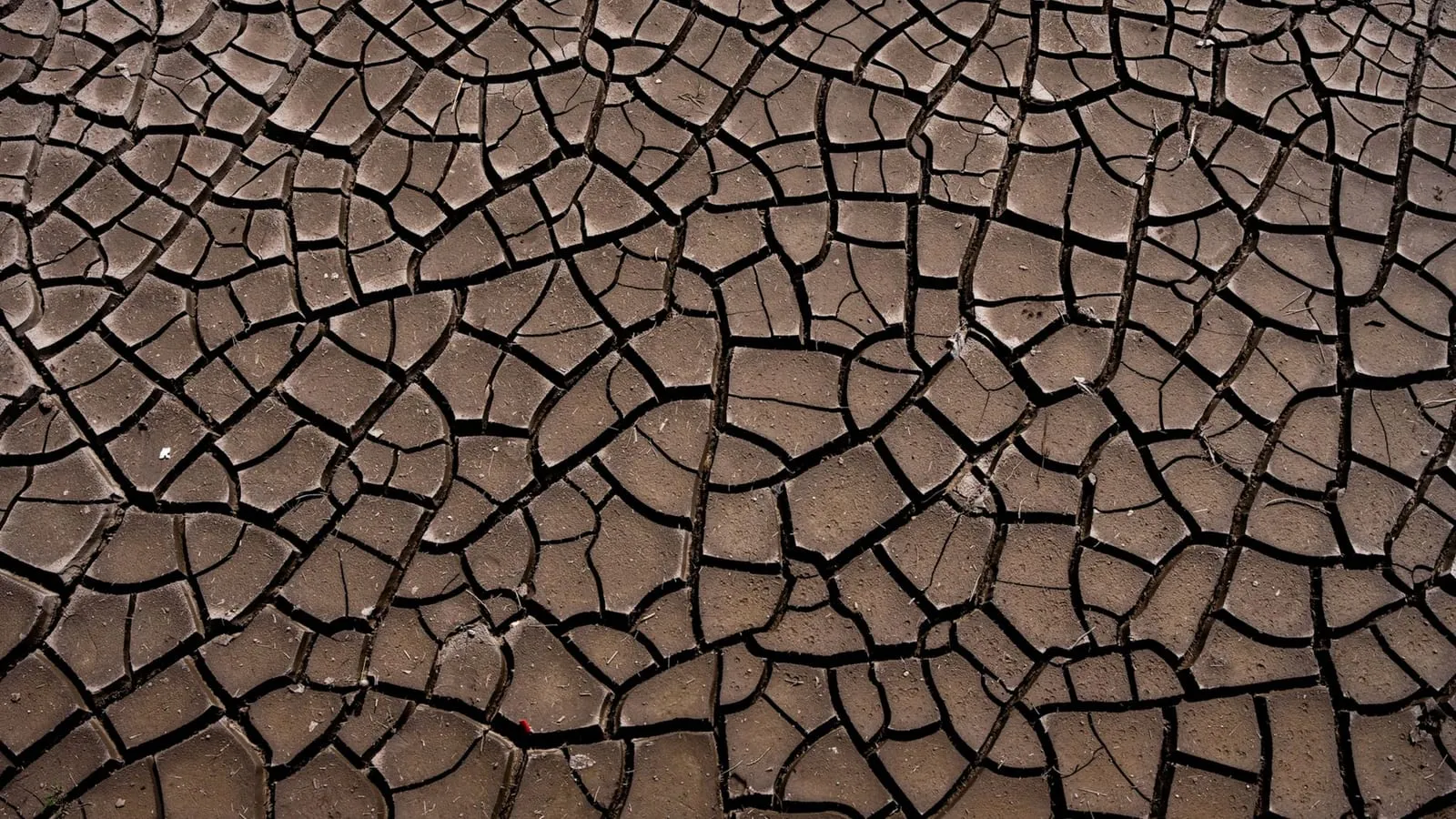
Persistent drought conditions across diverse geographic regions are forcing water managers to prioritize the mitigation of surface losses to maintain essential supplies.
This week in water
- Scientists are expanding monitoring efforts for evaporation on the Colorado River to better understand its impact on ongoing water shortages (KUNR Public Radio).
- The City of Statesville has lifted mandatory water restrictions as localized drought conditions show signs of improvement (City of Statesville).
- Recent updates regarding the Washington water supply indicate varying availability across the state (Department of Ecology - State of Washington).
- In Colorado, severe drought is creating a cascade of issues ranging from fishing restrictions to threats against power supplies (The Denver Post).
- Water conservation initiatives in Aurora are facing both successes and significant hurdles as the drought continues (CBS News).
- Emergency fish salvage operations are occurring in a Huerfano County reservoir to ensure municipal water supplies during drought (Colorado Springs Gazette).
- Missouri officials are mapping groundwater sources in the northeast part of the state to improve resilience against drought (Brownfield Ag News).
- Residents in the South Carolina Lowcountry are facing challenges as drought risks cause wells to run dry (Bluffton Today).
The invisible drain on reservoir security
The recent reports from Colorado and Washington highlight a recurring theme in hydrologic management: the unpredictability of surface water availability. When reservoirs shrink due to lack of precipitation, they often lose a disproportionate amount of their remaining volume to the atmosphere. This is not merely a loss of liquid; it is a transfer of energy and mass that complicates storage management for municipalities and farmers alike.
As seen in the Huerfano County fish salvage (Colorado Springs Gazette), the physical contraction of water bodies creates immediate ecological crises. However, the underlying driver is often a combination of low inflow and high evaporation rates. When surface area remains large but depth decreases, the ratio of evaporative loss to total volume increases, making the reservoir increasingly vulnerable to weather fluctuations.
Understanding what is evaporation is critical for engineers attempting to model these losses. It is a complex process driven by the energy budget, where solar radiation provides the latent heat of vaporization required to move water molecules from the liquid phase to the vapor phase. In regions like the Colorado River basin, where monitoring is currently being expanded (KUNR Public Radio), the goal is to quantify how much of the “lost” water is attributable to these atmospheric transfers versus actual consumption.
Addressing the wind and solar components
The news from Colorado regarding threatened power supplies (The Denver Post) underscores the interconnectedness of water and energy. Many power generation systems, particularly hydroelectric and thermal cooling systems, rely on stable water levels. When evaporation depletes these levels, the reliability of the grid can suffer.
One of the primary drivers of rapid evaporation in large, open basins is wind. High-velocity air moving across a surface reduces the vapor pressure deficit at the water-air interface, effectively “sweeping” away moisture and allowing more water to escape. This is often discussed in terms of aerodynamic resistance, where the physical roughness of the surface and the wind speed determine the rate of mass transfer (Harbeck 1962).
To combat this, managers often look toward methods to reduce evaporation that physically interrupt the air-water interface. These include:
- Modular floating covers: These systems, such as floating modular covers, use interlocking tiles or spheres to provide a physical barrier. While field studies generally show reductions between 65% and 80% (Mady et al. 2021), high-performance options like Rhombo Hexoshield can reach up to 98% reduction (AWTT).
- Windbreaks: Strategic placement of vegetation or structures can offer modest reductions, typically between 5% and 20% (Craig et al. 2005).
- Floating solar: By combining water surface coverage with energy production, floating solar (FPV) addresses both the need for water conservation and renewable energy, though it carries higher capital costs than simple covers.
Scalability and the limits of natural solutions
As the drought in the South Carolina Lowcountry and Missouri (Bluffton Today; Brownfield Ag News) demonstrates, water scarcity affects everything from private wells to massive groundwater aquifers. While surface evaporation is the focus of most physical barriers, the management of groundwater involves different strategies, such as improved mapping and extraction efficiency.
For surface water, some operators attempt to use biological methods. For instance, using duckweed or azolla can provide natural shading. However, these biological covers are often region-specific and difficult to scale across massive reservoirs like the Colorado River. They also present challenges regarding nutrient loading and may not provide the consistent, high-percentage coverage required during extreme drought events.
In contrast, engineered solutions like shade balls provide more predictable coverage. Shade balls typically achieve approximately 91% coverage, which can lead to evaporation reductions in the range of 66–75% in field studies. While they are effective, managers must consider the potential impact on water chemistry and the long-term stability of the spheres in high-wind environments.
Integrated management for a water-stressed future
The successes and struggles reported in Aurora (CBS News) suggest that no single conservation method is a “silver bullet.” Effective water security requires an integrated approach that combines behavioral changes (reduced consumption) with technical interventions (evaporation mitigation).
For large-scale utility providers, the choice of technology often comes down to a trade-off between cost, maintenance, and performance. Continuous geomembrane covers can offer very high seals (up to 95%+) (Yao et al. 2021), but they require complex anchoring and may struggle with buoyancy changes during heavy rain. Modular systems offer more flexibility and ease of installation, making them a frequent choice for smaller or more irregularly shaped storages.
As we move toward more frequent and severe drought cycles, the ability to precisely calculate and then actively mitigate evaporation will be a cornerstone of regional water resilience. Whether through expanded monitoring in the West or improved groundwater mapping in the Midwest, the data suggests that the era of treating surface water as an inexhaustible resource is over. Protecting the water we already have is now as critical as finding new sources.
Frequently asked questions
- How much water can floating covers actually save?
- Modular floating covers typically achieve 65–80% reduction in field studies (Mady et al. 2021), while high-coverage manufacturer options like Rhombo Hexoshield can reduce evaporation by up to 98% (AWTT).
- Does evaporation happen more in windy or calm areas?
- Wind generally increases evaporation rates by stripping the saturated air layer from the surface, a process closely tied to [aerodynamic resistance](/glossary/aerodynamic-resistance) (Harbeck 1962).