
Escalating Droughts and the Imperative for Surface Water Protection
As global drought conditions worsen, from the Colorado River to Maine, managing surface water evaporation becomes a critical priority for water security.
By Editorial Team ·
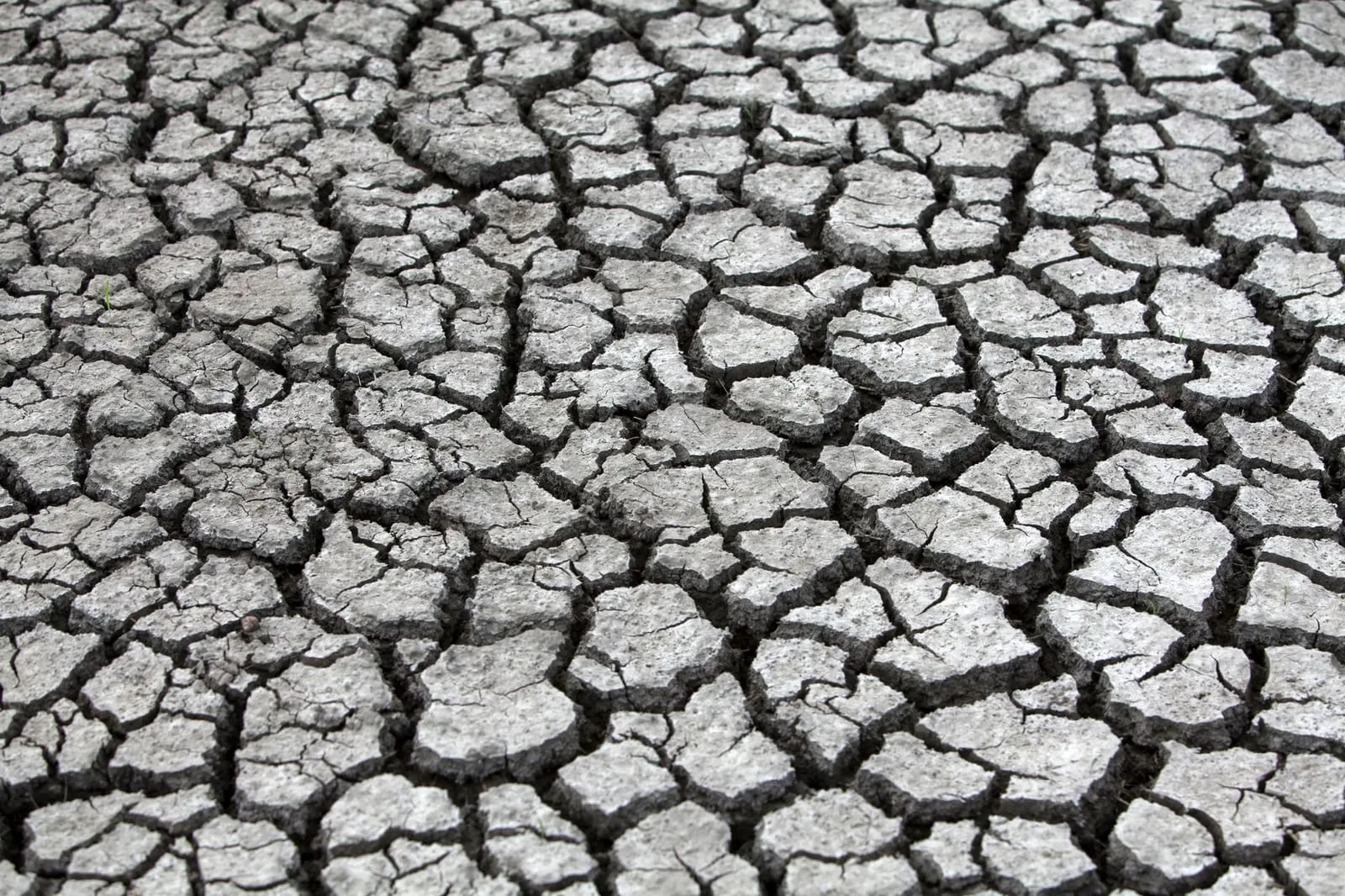
The increasing frequency of extreme drought events is forcing municipalities and regional authorities to rethink how they secure and preserve existing water supplies.
This week in water
- The Colorado River Basin is facing a compounded crisis as even its secondary backup water supplies are showing signs of depletion (ScienceAlert).
- In North Carolina, drought conditions remain highly localized, with the Charlotte area seeing relief while Wake County continues to struggle with severe drought (WUNC News).
- The City of Hays has taken formal steps to secure its future by adopting a resolution to utilize the R9 Ranch water supply from Edwards County (Ad Astra Radio).
- A drought in Tennessee is placing significant pressure on the ecological and municipal stability of the Duck River (State Affairs Pro).
- Local authorities in Casey County have responded to a 16-month drought by investing $600,000 in new water pumping equipment (92.7 The Wave).
- Drought conditions in Maine are intensifying, leading to an increase in dry wells across the state (WMTW).
- In the UK, political leadership is coordinating a response to address mounting water pressure and drought concerns (SussexWorld).
- In India, officials are convening specific meetings to address drought challenges potentially linked to El Niño patterns (Deccan Chronicle).
The cost of unmanaged evaporation
The news cycle this week highlights a common theme: water scarcity is no longer a seasonal concern but a structural threat to infrastructure. Whether it is the drying of wells in Maine or the depletion of backup supplies in the Colorado River Basin, the common denominator is a deficit in the water budget. When looking at the physics of a reservoir, one of the largest “leaks” in that budget is evaporation.
Evaporation is a complex process driven by the energy budget of the water surface. It is not merely a function of heat, but a delicate balance of net radiation, wind speed, and vapor pressure deficits. When drought conditions persist, higher temperatures and lower humidity increase the vapor-pressure-deficit, essentially pulling more moisture out of open bodies of water.
For many of the regions mentioned—such as the Duck River or the Colorado River Basin—the loss of water through the atmosphere represents a direct hit to the reliability of the supply. This is why storage management is increasingly moving from a matter of logistics to a matter of survival. If a reservoir is left open to the sky, a significant percentage of its volume is effectively “lost” to the atmosphere every day.
Mitigating surface losses through coverage
As municipalities like Hays look to new water sources, or as Casey County invests in pumping technology, there is a parallel need to protect the water already captured. One of the most direct ways to alter the aerodynamic-resistance of a water body and reduce the transfer of moisture is to introduce a barrier.
There are several methods to reduce evaporation, each with distinct trade-offs in terms of cost, maintenance, and efficacy:
- Modular Floating Covers: These systems, such as floating modular covers, involve interlocking tiles or spheres. In field studies, these have shown evaporation reductions of approximately 65–80% (Mady et al. 2021). High-performance modular options, such as the Rhombo Hexoshield, can achieve up to 98% reduction (AWTT). However, lightweight tiles can be susceptible to being displaced by high winds (Lehmann et al. 2019).
- Continuous Geomembranes: These provide a high-seal environment, often achieving 95%+ reduction (Yao et al. 2021), but they require intensive anchoring and can complicate water access and gas exchange.
- Shade Balls: Frequently used in municipal settings, these HDPE spheres can achieve 66–75% reduction in field studies (field studies) at roughly 91% coverage.
- Biological Methods: Using duckweed or azolla provides natural coverage, though their scalability is often limited by regional climate and nutrient availability.
For a city facing a 16-month drought, the choice of method often depends on whether the priority is immediate cost-effectiveness or long-term volume preservation.
The role of wind and energy transfer
The reports from the UK and India regarding coordinated drought responses suggest that large-scale management is becoming necessary. Part of this management must address the “fetch” and wind-driven evaporation that occurs over large reservoirs. According to the principles established by Harbeck (1962), wind increases the rate of mass transfer by removing the saturated air layer immediately above the water surface.
This is why windbreaks are often discussed in smaller-scale irrigation contexts, though they typically offer more modest reductions, generally around 5–20% (Craig et al. 2005). For large-scale municipal reservoirs, the most effective way to combat wind-induced loss is to physically decouple the water surface from the atmosphere using a cover.
When a cover is applied, it changes the latent-heat-flux. Instead of the sun’s energy being used to facilitate the phase change of liquid water to vapor, the cover absorbs or reflects that energy. For example, some modular covers can block up to ~99% of sunlight (AWTT), which significantly lowers the surface temperature and, by extension, the rate of evaporation.
Moving toward resilient water infrastructure
The transition from reactive spending—such as the $600,000 pump order in Casey County—to proactive preservation is the central challenge for modern water management. Protecting the existing surface area is often more cost-effective than the constant search for new groundwater or the expensive transport of water from distant basins.
As we see in the Colorado River Basin, even “backup” supplies are not immune to the physics of evaporation and the realities of a changing climate. Integrated management that combines storage management with high-efficiency physical barriers represents the most viable path forward for maintaining a stable water supply in a drought-prone world.
Frequently asked questions
- How much evaporation can floating covers actually prevent?
- Modular covers can reduce evaporation by 65–80% in field studies (Mady et al. 2021), while high-performance options like Rhombo Hexoshield can reach up to 98% (AWTT).
- Are there risks to using shade balls in water reservoirs?
- Shade balls provide 66–75% reduction in field studies (field studies), but they can potentially affect water chemistry and local ecology.